
The South African Digital Context
How many people are using the internet and key online and social media platforms in South Africa.
This is an always up-to-date resource where we will share the latest stats pertaining to how people are using the web in South Africa. We draw this insight from a number of credible resources, including our own direct research where reliable secondary data isn't available.
South African Social Media Users
- WhatsApp: 16,4 million
- Facebook: 12 million
- Youtube: 8,6 million
- Twitter: 7.4 million
- LinkedIn: 4.1 million
- Instagram: 2.7 million
- Pinterest: 840 thousand
- Snapchat: 312 thousand
References:
- WhatsApp via: WeAreSocial report stating 31% of South Africans are on WhatsApp, Jan 2015
- Facebook via: Facebook reveals user numbers for South Africa, September 2015
- YouTube, Twitter, and Instagram via Fuseware & WorldWideWorx, September 2015
- LinkedIn source, direct from LinkedIn, October 2015
- For Snapchat figure see http://www.statista.com/statistics/326445/leading-snapchat-market/ - puts it at 2% of mobile internet users. Mobile internet users = ±92% of total web users have a smartphone (via IAB + Effective Measure SA Mobile Report)
Most downloaded apps in South Africa, as of December 2015

Useful resources:
- IAB SA website user data
- South African Internet Map (explore the top websites in SA by category)
- The Memeburn guide to the South African ad agency landscape
- MyBroadband: What people in the SA digital industry earn
Smartphone Users

via http://www.slideshare.net/kleinerperkins/internet-trends-v1?ref=http://www.kpcb.com/internet-trends
That's it for now. We will keep this page up to date, and keep adding to the stats here. So if data is your thing, please bookmark this page and keep returning. And if you gained some value from this, please take a moment to share the URL with anyone else who might also benefit.
Online Advertising revenue in South Africa for 2015:
Search: R865 million
Online Display Advertising: R566 million
Source: PwC report. See more at Memeburn
The Social Campaign Canvas
The Social Campaign Canvas helps you conceptualise a high interest announcement or event on social media that delivers measurable business or campaign value.
The social campaign canvas one-page framework that coaches you through 9 considerations to create an event on social media that gets noticed and delivers business value.
This post explains how the canvas works, and at the end you can click a button to download the .pdf to print out and use.
The Pillars

Dynamics
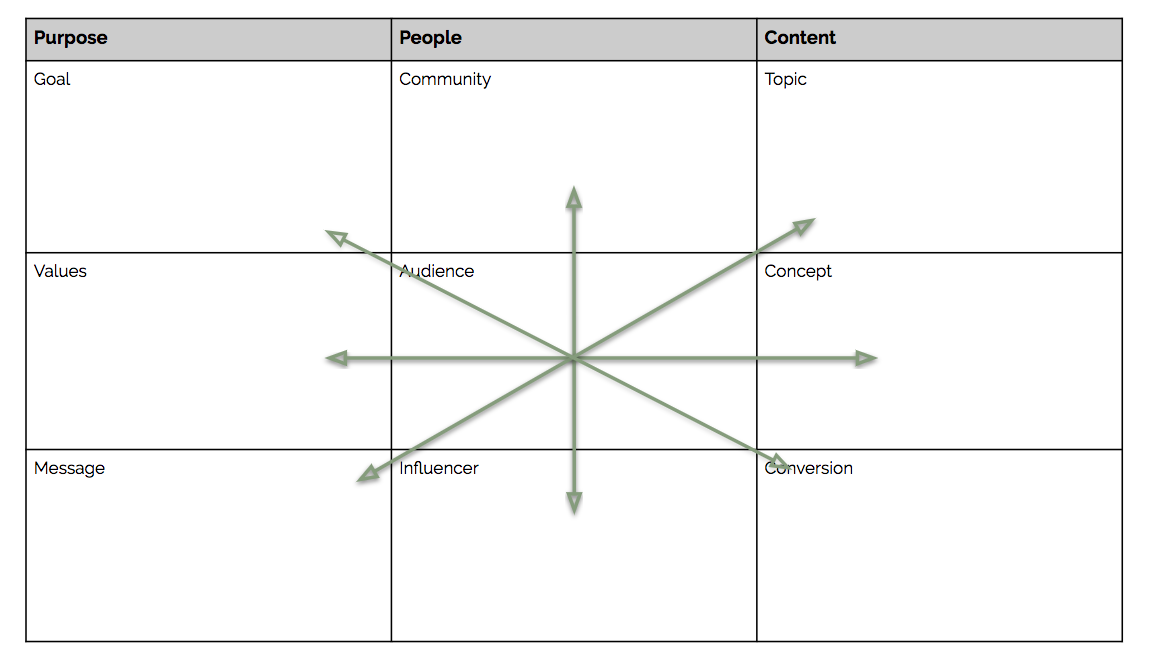
- Business Purpose corresponds with Content Conversion - i.e How do you ensure your content delivers on your business objective.
- Your Partners need to correspond with the Community - Partners give you access to your community, can give your credibility in that community, and help you with messaging and concept for the community.
- Your Values need to be expressed clearly in the creative Concept, this gives emotional consistency and depth to the campaign.
- Your Message is what you want to say, the Topic is what people are interested in talking about. Ultimately, you need to combine the two to ensure your message gets through in a way that's interesting a relevant.
- And at the centre of the canvas are your Audience. The reason we're doing the campaign is to get them to act, and so everything on the canvas should relate to them and what is most likely to work.
Working with the Canvas

Related Content

Book this Class
Google's 8 Habits of Effective Managers
Google's “people analytics” team conducted research to discover the roles and behaviours of the most effective managers at Google. These were distilled into 8 habits, and shared in Lazlo Bock's 2015 book "Work Rules!"
In 2002 Google tried to create a completely flat organisation - they got rid of managers, in an attempt to remove barriers to collaboration and rapid idea development. What the realised very quickly was that this approach achieved the opposite - decisions bottlenecked and chaos almost ensued.
This sparked an internal research project to discover the qualities of outstanding management at Google. After analyzing reams of data consisting of performance reviews, surveys, feedback and interviews, statisticians zeroed in on 8 key qualities, ranked in importance.
1. Be a good coach
- Provide specific, constructive feedback, balancing the negative and the positive.
- Have regular one-on-ones, presenting solutions to problems tailored to your employees’ specific strengths.
2. Empower your team and don’t micromanage
- Balance giving freedom to your employees, while still being available for advice. Make “stretch” assignments to help the team tackle big problems.
3. Express interest in team members’ success and personal well-being
- Get to know your employees as people, with lives outside of work.
- Make new members of your team feel welcome and help ease their transition
4. Don’t be a sissy: Be productive and results-oriented
- Focus on what employees want the team to achieve and how they can help achieve it.
- Help the team prioritize work and use seniority to remove roadblocks.
5. Be a good communicator and listen to your team
- Communication is two-way: you both listen and share information.
- Hold all-hands meetings and be straightforward about the messages and goals of the team. Help the team connect the dots.
- Encourage open dialogue and listen to the issues and concerns of your employees.
6. Help your employees with career development
7. Have a clear vision and strategy for the team
- Even in the midst of turmoil, keep the team focused on goals and strategy.
- Involve the team in setting and evolving the team’s vision and making progress toward it.
8. Have key technical skills so you can help advise the team
- Roll up your sleeves and conduct work side by side with the team, when needed.
- Understand the specific challenges of the work.
Three counter-productive behaviours to effective management
1. Have trouble making a transition to the team
- Sometimes, fantastic individual contributors are promoted to managers without the necessary skills to lead people.
- People hired from outside the organization don’t always understand the unique aspects of managing at Google.
2. Lack a consistent approach to performance management and career development
- Don’t help employees understand how these work at Google and doesn’t coach them on their options to develop and stretch.
- Not proactive, waits for the employee to come to them.
3. Spend too little time managing and communicating
Further reading on this...
Conducting a Customer Interview for Product and Marketing Insight
Doing a customer interview is one of the most efficient ways to gain insight to develop your product or the way you market it.
Doing a customer interview is one of the most efficient ways to gain insight to develop your product or the way you market it.
You book an appointment to meet a customer for 30 - 60 minutes, preferably not someone you know already but who would represent a real potential buyer of your product or service. The purpose of the interview is to try and understand if the problem you are trying to solve with your product is a problem the customer actually has. That's the problem validation or problem finding part of the interview. You also want to gain useful insight into how the customer buys your kinds of products or services, and how you can fit in with that (or improve that experience for them), and then talking pricing. A bonus is if you actually get an order, but that certainly isn't the point.
Following are two useful documents to help you get going on your first customer interviews.
Download the homework sheet for this assignment. The questions from this
Content & Community: The Bonfire, Wildfire, and Fireworks Strategy
To build an engaged community you need to give people reasons to keep coming back. Our Hot Topics framework does this. It uses a fiery metaphor to remind us about the 3 key drivers of community engagement.

To build an engaged community you need to give people reasons to keep coming back. Our Hot Topics framework does this. It uses a fiery metaphor to remind us about the 3 key drivers of community engagement.
🪵 Bonfires, are about consistent community engagement;
🔥Wildfires, are about surprising content experiments & breakthroughs;
💥Fireworks, are about promoted posts and guaranteed content winners.
We tend to combine all three when we’re considering a content strategy, as they all build on each other.

Let's explore each of these a bit more with some practical examples.
Bonfires
In the real world, a bonfire is a gathering point where we share stories, and have conversations that connect us. Digitally, a bonfire is about community engagement.
Digitally, Bonfire content is how you join the conversation. It’s all about who you follow, which hashtags you’re tracking. It’s about the community events and gatherings you contribute to. It’s about relevance and cultural resonance.
Consistency is key. You don't want the embers of conversation to die down, rather you want to keep people involved and engaged. You don't just drop content into your timeline randomly, each piece of content is produced as fuel for an ongoing conversation.
Momentum is key - you have to use energy to get it going, and then keep fuelling it. If you find a hot topic, don’t just post on it once, keep going.
Practically, we’re using hashtags to connect with broader conversations. We’re following and responding to influential voices in these conversations too. And we’re aiming to build trust and recognition over time. So consistency and momentum really are important here.
Bonfire content activities
Identify a theme, topic or community you want to build influence with;
Find and connect with the most influential voices on your topic or theme;
Stay on topic, and on-brand;
Build a consistent rhythm of posting on key themes and keep it up;
Respond and engage to posts on the topic with flair;
Focus on building lists, subscribers, and followers so you can more easily reach people when you need to activate them (for your Fireworks and Wildfire moments)
There is no hierarchy around a bonfire, but there can be leadership and influence.
Keywords: Connection. Community. Consistency. Content Calendar. Conversational Momementum.
Fireworks
Fireworks are spectacular, they can be seen far and wide.
Firework content is content you plan to succeed. The easiest way to guarantee a winner is through paid promotion, organic boosting (seeding to supporters), and content excellence.
We don’t hope our firework content performs well, we plan for it. We build up to it, time the release of it perfectly, promote it with paid media spend, and send it to our community directly and ask them to share it.
Each campaign should have at least one key piece of super-successful content around which the rest of the campaign is built. Often we have several: the launch video, mid-campaign rally, and wrap-video.
Timing is important with fireworks, all your influencers should announce the moment at the same time to create a trending topic.
Examples at Treeshake of this are campaign launch videos; our lists celebrating change-makers; and key announcements.
Firework content activities:
Pick the optimal date and time for your firework content.
Pick a hashtag so people can find each other on the theme.
Get in touch with influential people on the topic and secure their involvement before you launch.
Make it easy to participate: clear call to action, and compelling reason to get involved. You might event pre-produce content templates for your “influencers” (or social media volunteers) to use for their posts.
On the posting date (or date range) mobilise as many people to get onto social media and post at the same time using the hashtag.
Get a group of influencers/volunteers to spend time commenting or responding to people on the hashtag so that it’s really active.
Keywords: Cost. Calendar. Collaboration. Coordination. Conversion.
Wildfires
Wildfires spread fast, burn hot, and happen unpredictably. Digitally, it’s about content that “goes viral” and drives results and reach for your brand, message or movement.
On social media wildfire content is content that spreads from person to person and where ANYONE can contribute to the conversation, even if they don't know anything about the actual topic.
The keys to this kind of content are that it should be timely, unexpected, and taste-makers should get involved.
Wildfire content activities:
Create beautiful, surprising or super-relevant content regularly.
Wildfire content is often brave, experimental, or perfectly timed.
Follow the news and keep a look out for emotive pieces that you can create content about. Improve your taste as you learn what your people respond to.
Get fast and accurate in your copywriting and design so you can produce quality content really quickly in response to key news event.
Help your content spread by sending it directly to supporters, friends and influencers and asking them directly to share it.
Keywords: Creativity. Timing. Responsiveness. Surprise!
Related Classes








Is your brand smashable?
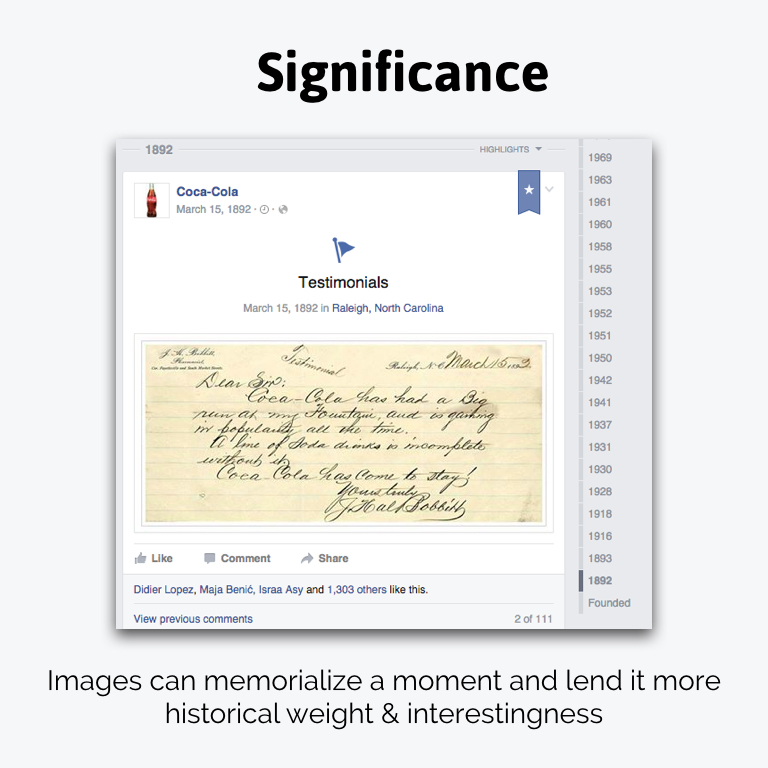
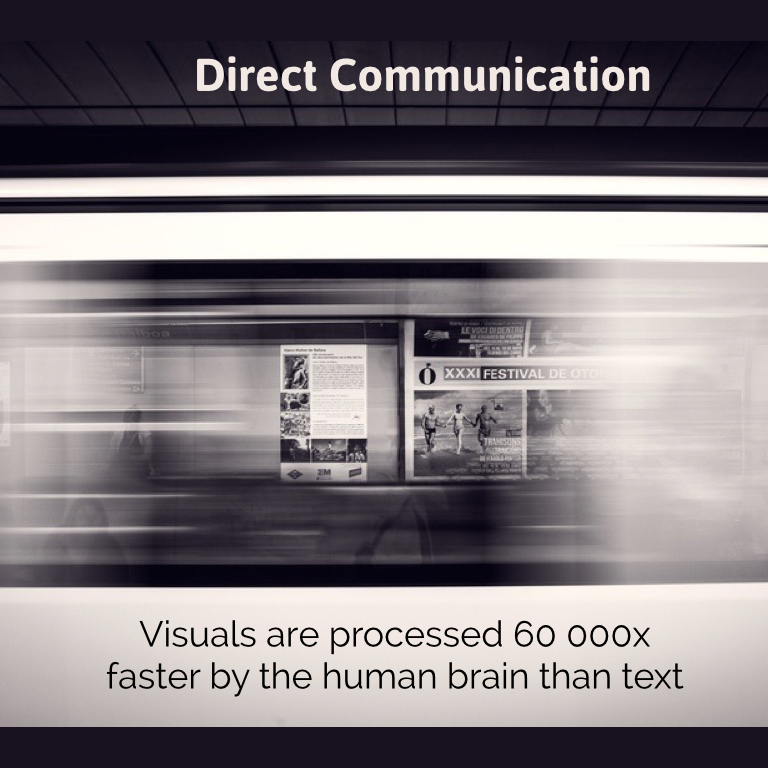
According to Martin Lindstrom, the best brands are Smashable. For example, if you saw a piece of a broken Coca Cola bottle, you'd probably be able to recognise it. Coca Cola is a "smashable brand", any part of it can lead us back to the source.

The "smashable brand" theory was developed by Danish author, and brand expert, Martin Lindstorm, who holds that the best brands are those that are smashable.
Lego is one such brand. Consider the humble Lego brick. Immediately recognisable, it's a brand icon. If you were to walk into a Lego movie by mistake there would be no doubt about the brand. It is a consistent experience in terms of visuals, tone, and even world-view. No matter how you encounter the brand, it is recognisable as a part of a bigger whole.
In the digital context, brands are smashed all the time. You see brand tweets and branded Facebook posts out of context. You scroll down the page and miss all the clever creative in the banner ads. You open a brand email, but only read the first half. People seldom get to experience the brand as a whole online.
This fragmented way of experiencing brands is problematic for both companies and consumers. Fragmented brands are ignored and forgotten. People experience a lot of clutter online - like shards of broken glass scattered in the environment - and it is off-putting.
How to tell if your brand is smashable on social media?
Consider whether your last few posts could just as well have been posted by your one of your competitors? In other words, if your brand's voice, character, purpose and community aren't coming through in a distinctive manner, then your brand is smashed, and not smashable.
You want to be visually consistent, tonally consistent, and most importantly: consistent in world-view. Lego, for example, stands for the power of productive play and the value of imagination. No matter where you encounter the brand, this is the prevailing world-view.
Examine your online advertising efforts. Is it well designed and compelling for the web, or is it just a shrunk print ad?
Level-up from being Smashed, to being Smashable.
Start paying attention to both the big picture and the details.
Big picture: What does your brand stand for, and why should people care?
Details: Is the look, voice, and feel consistent wherever people encounter the brand - every touch point, online, in-store, in-person, on Twitter, on-the-phone, the brochure and so on. All of these fragmented pieces represent you, and they should be instantly recognisable as a whole.

Email Newsletter Scheduling
Making sure your emails come when expected and wanted, including how often to mail, what time, and for what occassion.
Welcome Emails
When someone signs up for your email newsletter, or opts-in for email communications from you, the first thing you need to do is follow up, quickly, because they are expressing a current interest in what you have to offer.


According to the director of Epsilon’s strategic and analytic consulting group, welcome emails typically have the highest open rates of any marketing emails: 50 to 60%.
Furthermore, welcome emails see 3x more transactional revenue than regular promotional mailings.
Your email service provider (ESP) should have an automated confirmation of subscriptions email setting. You should check how long it takes for you to get your confirmation mail. If your ESP hasn't got servers near your customers, then perhaps use an ESP like Mandril that prides itself on delivering this kind of delivering this kind of automated email quickly.
The Welcome Series
After the welcome email, which may contain a confirmation link, it is often good idea to have a pre-prepared series of emails to initiate your subscribers to your list and offering.
A study from Campaign Monitor found that the first 6 emails you send get the highest engagement rate. So you should try make these emails extra-awesome, showcasing the best of what you have to offer.
Pay Flynn, from Smart Passive Income, recommends asking for engagement on roughly every 3 - 4 emails, as this keeps your audience primed for interaction without putting them off by asking for too much too often.

The welcome series of emails is automated. In addition to your normal bulk mailings, they will get an initial set of emails to initiate them to your content.
Email Frequency
More email means more sales, right? Actually, the more you mail people the lower your engagement rate per email.
After analysing over 2 billion emails, Campaign Monitor found that the optimal frequency is a mail every fortnight. However, the general advice is that you should ask your customers how often they want to hear from you, or do testing to see what frequency best suits your content.
What day of the week should you send your email?

Source: Demystifying the Inbox, Everlytic & Effective Measure, 2013

Designing Email for the Win
The design of your email has a dramatic impact on how effective it is in achieving your goals. This post looks at how to optimise your call-to-action and layout.
The design of your email has a dramatic impact on how effective it is in achieving your goals. To start with: you need to consider:
- What is your goal for this email?
- What does your recipient want from this email?
Email is a productivity tool, so it is important to be clear and direct about your purpose.
Call to Action
When you email your subscribers, you’re usually looking for a response from them. You may want them to make a purchase, to respond, to share something on social media, or simply to click through to your site. Since email is a productivity tool, your subscribers will want to feel productive when they get your mail, you want to give them something to do or know that confirms that it was worthwhile opening your email. This is your Call to Action (CTA). It needs to be a simple, straightforward request that is impossible to miss.
Often-times your call to action is the point of the mail where you say "click here", "read more", "buy now", or some other instruction. It is important that this CTA is easy to see, impossible to miss, and has a sense of urgency. Your CTA should be short and clear: an effective call to action is generally 2 - 5 words long.

AWeber ran a test on its email newsletter and found that putting the call-to-action in a button was 17% - 33% more effective than putting it in a text-link. However, after 20+ mails with the button, text-links started performing better than the buttons. The key take-out? Calls-to-action need to stand-out, and you should change them occassionally to ensure people notice them more. And, as-always, keep testing. (Source: Aweber)
Testing has shown that it is better to have ONE call to action (CTA) per email rather than multiple calls to action.

Whirlpool found that having ONE Call-To-Action (Treatment) rather than multiple calls-to-action (Control) in an email address led to a 43% average increase in click-throughs (source: Marketing Sherpa)
Placement of the CTA depends on the content of the email. Generally speaking, putting your CTA "above the fold" (i.e. before someone has to scroll to read more) is more effective.
Responsive Email Design
More email is read mobile than on a desktop email client already. According to Litmus Email Analytics, 47% of email is now opened on a mobile device (Litmus, ”Email Analytics”, April 2014).
In fact, email is the most popular activity on US smartphones (Always Connected, IDC & Facebook, 2013) . In South Africa, it is only email as a surpassed by use of chat applications like WhatsApp, Mxit, and BBM.
Hence it is important to consider how your mail will appear on mobile. Below is an example of Responsive Email design:
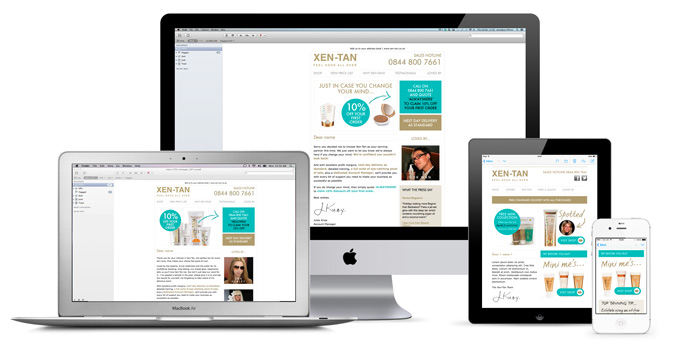
Inside-Out Creative designed an email for their client, Xen-Tan, that changes dimensions to fit the screen it is being viewed on. This is called Responsive Design.
Most decent Email Service Providers (ESPs) will have responsive themes. If you are putting together your own responsive HTML email then you should use a tool like Litmus to give you a preview of how your email will appear on different screens and email clients before you send it.

A preview of how your email will appear on different mobile clients, provided by Litmus.
The only problem with this is that up to 43% of people don't automatically have images displayed in their emails. So it is important that key text isn't put on your images, and that you have ALT text behind images in-case they don't appear. Consider styling your ALT text. This gives you an opportunity to grab your reader’s attention, even if images are disabled.





Learn to launch a spectacularly successful social media campaign.