
The Way We Measure Online Ads is Ruining the Internet
The most used metric for the reach of online ads, CPM (Cost Per Thousand Impressions) is completely and utterly broken and sits at the foundation of possibly one of the biggest con jobs in the history of modern economics, says media entrepreneur Tinus Le Roux.
The most used metric for the reach of online ads, CPM (Cost Per Thousand Impressions) is completely and utterly broken and sits at the foundation of possibly one of the biggest con jobs in the history of modern economics.
A journey into the world of Digital Marketing Metrics
It’s July 2014 and I’m shown into a board room on the top floor of One Coca-Cola Plaza in downtown Atlanta. I make an awkward joke about the ‘secret formula’ while I prepare to discuss the results of the four College Football Fancams we produced for Coke Zero the previous year.
The digital innovations team is excited. They took a chance on this guy with the weird South African accent and it turned out to be a massive success.
Thousands of fans spent an inordinate amount of time on the Coke Zero branded Fancams, they shared the content through their social networks, entered sweepstakes, watched the videos and did everything you want them to do in a successful digital campaign. This is what you could call "deep engagement". We were thrilled!
So, now it’s time to go big and the innovations team has organised a number of meetings with “different stakeholders to discuss our results and see how it could help them achieve their KPI’s”.

As a bit of background: My company, FanCam, captures super-high-res 360 degree images of cities and stadiums that are so detailed that people can go and find a picture of themselves and tag it on Facebook. This is a screen-capture of a SuperBowl FanCam.
After showing them the cool pictures, I dive straight into the numbers:
“For our Auburn Fancam we generated 120 000 pageviews, 90% of which were unique users, 68% on their mobile devices and an average time on site of 5 minutes per user. We captured 5 000 email addresses and identified the top 20 influencers at the school. Our...”
“That’s not particularly good,” interrupts one of the smartest guys on the social team.
I’m caught completely off guard and there is palpable discomfort in the brief silence that follows.
“One tweet from @CocaCola delivers more impressions than that and it doesn’t cost us a cent.”
He goes on to explain that they recently ran a Twitter campaign that delivered a billion impressions.
I’m completely stumped and I suddenly feel very, very far away from home. I thought our results were good. No, I know our results are good, but I have no comeback. A billion is a hell of a big number!
I deflect with a half decent, “I’d love to schedule a separate meeting so that the two of us can dive into the numbers a bit more,” and quickly put our Super Bowl Fancam on the projector to bring balance to the force, but my internal ‘non compute’ signs are flashing like crazy. I needed to discover the value of an impression to find out if I still had a business.
What I learned was so surprising but yet made complete sense. I'll start with the basics and we'll go from there.
Your Time Online is not Accounted For
To state the obvious, that free content you’re consuming every day, is paid for by advertisers. You’re not paying to see those holiday pics on Facebook because Facebook is getting paid by advertisers to display ads alongside them. Your news is free for the same reason and so is Pinterest and Twitter and Gmail and Bing and almost everything else. This is how the internet works.
Your attention is worth money and in exchange for it, you get subsidised content. It’s a great deal!
Where it gets interesting however is how your attention is measured and paid for:
The metric of the day is the CPM (Cost Per Mille) or simply put, “cost per a thousand impressions served”. Google, Twitter, Tumblr, Youtube and almost every other company providing you with free content is getting paid on a CPM basis. It’s the metric that makes the internet free.
It’s also completely and utterly broken and sits at the foundation of possibly one of the biggest con jobs in the history of modern economics.
The CPM Delusion
In 2014, advertisers bought $50B worth of impressions in the United States alone. That’s enough money to pay the full tuition fees of half the country's college students.
There is a problem however, in late 2014 Google reported that 56% of the ads bought in this way were never displayed in front of human eyes. You need to read that again.: Never displayed in front of human eyes. Not “never seen”. NEVER SHOWN. 56%.
How is this possible?
Well, the part about that CPM definition you (and many advertisers) missed, is the little word at the end: ‘served’. While it would be reasonable to assume that when you pay $20 CPM, you would reach a thousand people, that is not what ‘impressions served’ means. ‘Impressions served’ means, a server ran a program displaying your ad somewhere - not necessarily in front of a human.
It could be on a part of the page nobody ever visited or it could be on a screen in a dark room somewhere, but the assumption that you reached a 1 000 potential customers with your 20 bucks is very, very wrong.
But wait, it gets worse… The 44% of ‘good display ads’ in the aforementioned Google stat are described as “viewable ads”, but that doesn't mean they were actually viewed. In fact, the IAB definition of ‘viewable’ is that only half of that ad needed to be displayed on a screen for one second to count as an impression. That’s right: half of a banner ad appearing at the bottom of your screen for one second is deemed enough for you to have viewed that banner ad, read its message and pay attention to it. All while you’re actually busy paying attention to the content on the site.
So what does Google say about how many ads were displayed in full for 3 to 5 seconds? Well, Google doesn’t say anything. Convenient? If you’re selling banner ads at CPM, sure. So let’s do some napkin math here:
I spent $20 CPM and hoped to have 1 000 potential consumers pay attention to my ad. In my case, I’d like them to see my whole ad and have it in their field of view for 5 seconds, at least. Let’s look at the numbers
I pay for 1000 impressions (this is the 'M' in CPM). Google says 56% never reached a screen. That leaves us with 44% of 1 000. That's 440 impressions left. Considering that an ad needed half of its pixels displayed for 1 second to get into this ‘good bucket’, let’s be conservative and assume 10% of these ‘viewable’ ads had the whole ad in front of a human for 5 seconds. That gives us 44 impressions. Let’s say you pay attention to 10% of the banner ads actually displayed on your screen for 5 seconds or longer (do you??). We all know it’s less, but we can give CPM the benefit of the doubt here... That leaves us with 4.4 actual meaningful "impressions". Okay, so rounded up that brings us to 5 effective impressions for $20.
That’s $4 per viewed banner ad or in other words $4 000 effective CPM. And here’s the kicker, you're paying $4 000 CPM for something that consumers actively hate (see ad blockers) and will almost always find itself alongside another banner ad, diminishing what value there was even further.
Measuring consumer attention on a CPM basis make absolutely no sense to anyone - except those selling it.
“If this is true,” I hear an imaginary executive in Madison Avenue ask, “why have display ad budgets been increasing year over year and why aren’t they showing any signs of slowing down, smart ass?”
Dear “soon to be unemployed executive,”, two reasons:
One - Nobody is incentivised to rock the boat:
Brands? Nope. As long as that guy in the board room in Atlanta can tell his boss he delivered a BILLION impressions, he sounds like it’s worth having him around - and as long as Pepsi is reporting to deliver 2 Billion he has no incentive to report in any other way.
Agencies? Hell no! They earn commission on the $50B. Media sellers like Google, Facebook, Twitter? Not now, they’re busy printing CPM money.
Two - There has been no alternative mainstream metric to measure attention in the digital context.
So what has changed?
The Accountants are coming.
Despite all the hype, big brand digital marketers have had difficulty linking views and impressions to actual sales. Upper funnel awareness and target market lift was used to justify buying banner ads on ESPN’s home page, without having to report on the ROI delivered. In fact, Pepsi and Diet Pepsi lost 5% market share the year they went fully digital in their advertising. (Long read on this: How the Mad Men Lost the Plot).
CFO’s had to stand back because they weren’t paid to understand the dark art of advertising, they were there to make the numbers work. Problem is, advertising has become a numbers game and the accountants are smarting up. The most asked question in marketing is becoming: what's the ROI of that?
Against all wisdom, these accountants have been allowed to have Facebook and Twitter accounts and you can bet your bottom audited dollar there’s at least one CFO out there who has looked skeptically at the thousands of impressions delivered by that picture he shared off his calculator. Add their traditional distrust of CMO’s and the fact that Google admits 56% of the banner ads bought were never seen and you can be sure they’ll soon be asking some serious ROI questions in those budget allocation meetings.
Short version: If numbers people start asking serious questions about CPM, marketing people are going to struggle to justify their spend and will need to find more common sense metrics to do so.
There’s another player who is going to drive this change though - and it’s just as unlikely a hero as the accountants. Introducing good old print media. These guys are backed up in a corner, battered and desperate. They hate the impression economy, they just don’t know it by that name... yet!
How is it possible that a listicle on Buzzfeed has more value than a New York Times article? In the impression economy, where all impressions are equal and the time and quality of the attention is not measured, the listicle is worth more than the article.
In the attention economy however, the time on site, intensity of attention and the profile of the target audience have the potential to help the NY Times sell their attention at a higher rate.

The Financial Times (accountants + newspaper) have already made the switch. Since 2014, they’ve stopped selling ads on a CPM basis and have brought in CPH (cost per hour) as a more sensible replacement.
The sales pitch basically goes like this: “Who wants 500 hours of attention of CEO’s in Germany?” A number of brands signed up and the FT has reported that they’re really happy with the initial results. Why? Because it makes sense to smart advertisers.
Which brings us to an alternative metric to measure attention in the digital space.
Let me try and explain with a real world example to illustrate the difference between an impression and actual attention.
My wife is going away for the weekend. I’m in charge of our 3 boys aged 8, 6 and a terrible 2. Just before she heads out of the door she reminds me that our son Jean needs to be at his cricket match at 9am, Tian’s medication has been measured out, and I should not ‘accidentally’ leave Petri at the park.
“Are you paying attention?” she asks as I scroll through my Twitter feed on the phone.
In the impression economy I can answer with a resounding, confident and truthful, “Yes”. I have indeed registered her as an impression. I am definitely aware that she is there and that she is saying … something. In the real world, however, I’m about to get my ass kicked.
Humans don’t live in the impression economy, we live in the attention economy and my dearest wife knows this. She also knows (as should all advertisers) that she requires a certain type of attention for the communication to be effective.
“Have you been listening to all I have been saying?”, comes the follow up. In other words: Did you listen from start to finish (time) and did you do so without reading tweets (intensity)? This is how you measure attention in the real world. Not by registering an ‘impression’.
There is a third attention metric: knowing if you’re capturing the attention of the appropriate target audience, but I hope my wife never asks that question.
Marital bliss aside, how do we apply the fundamentals of the attention economy to digital advertising?
Well, we start by measuring attention in a way that makes sense.
Enter Dominic Good, advertising sales director at the Financial Times, explaining the sense behind their recent switch from CPM to CPH.
“While CPM values every impression the same, CPH uses time to measure value. The FT has shown through extensive testing that brand familiarity and recollection among readers increases significantly the longer an ad is in view. Adverts seen for five seconds or more on FT.com show up to 50% higher brand recall and familiarity than ads that are visible for a shorter period of time.”
He is echoed by Twitter co-founder and founder at Medium, Ev Williams: “We pay more attention to time spent reading than number of visitors at Medium, because in a world of infinite content—where there are a million shiny attention-grabbing objects a touch away and notifications coming in constantly—it’s meaningful when someone is actually spending time,”
“After all, for a currency to be valuable, it has to be scarce.”
And that is the beauty of the attention economy right there, scarcity.
See, you can copy, paste and serve as many banner ads as you like, but human attention is a limited resource. It’s a function of the number of humans in your target audience and the number of hours they have available to pay attention to your brand. It really is that simple.

The future
Imagine a world where we admit to the reality that attention is a limited, valuable and diminishing resource. This is a world where “attention holding” is more valuable than “attention grabbing”.
Where CMO’s focus on tactics that will allow them to capture as many of those minutes for as little money as possible. Where real world principles are used to judge the effectiveness of digital marketing campaigns.
No more wasteful spending on ineffective, unseen banner ads.
No more slideshow websites to generate more impressions.
Instead, more money for innovation and high quality content and serious questions about what consumers care about (pay attention to).
By the way, we had our follow-up meeting with that smart Coca Cola team and ended up doing another 20 games for Coke Zero (even more successful than the first ones) but those couple of awkward minutes on the 29th floor of One Coca-Cola Plaza, put me on a path to try and understand the world of digital marketing metrics - and it’s been a wild ride.
This is the Moneyball of marketing and everything is about to change - again.
#CPMmustFall

The South African Digital Context
How many people are using the internet and key online and social media platforms in South Africa.
This is an always up-to-date resource where we will share the latest stats pertaining to how people are using the web in South Africa. We draw this insight from a number of credible resources, including our own direct research where reliable secondary data isn't available.
South African Social Media Users
- WhatsApp: 16,4 million
- Facebook: 12 million
- Youtube: 8,6 million
- Twitter: 7.4 million
- LinkedIn: 4.1 million
- Instagram: 2.7 million
- Pinterest: 840 thousand
- Snapchat: 312 thousand
References:
- WhatsApp via: WeAreSocial report stating 31% of South Africans are on WhatsApp, Jan 2015
- Facebook via: Facebook reveals user numbers for South Africa, September 2015
- YouTube, Twitter, and Instagram via Fuseware & WorldWideWorx, September 2015
- LinkedIn source, direct from LinkedIn, October 2015
- For Snapchat figure see http://www.statista.com/statistics/326445/leading-snapchat-market/ - puts it at 2% of mobile internet users. Mobile internet users = ±92% of total web users have a smartphone (via IAB + Effective Measure SA Mobile Report)
Most downloaded apps in South Africa, as of December 2015

Useful resources:
- IAB SA website user data
- South African Internet Map (explore the top websites in SA by category)
- The Memeburn guide to the South African ad agency landscape
- MyBroadband: What people in the SA digital industry earn
Smartphone Users

via http://www.slideshare.net/kleinerperkins/internet-trends-v1?ref=http://www.kpcb.com/internet-trends
That's it for now. We will keep this page up to date, and keep adding to the stats here. So if data is your thing, please bookmark this page and keep returning. And if you gained some value from this, please take a moment to share the URL with anyone else who might also benefit.
Online Advertising revenue in South Africa for 2015:
Search: R865 million
Online Display Advertising: R566 million
Source: PwC report. See more at Memeburn
The Social Campaign Canvas
The Social Campaign Canvas helps you conceptualise a high interest announcement or event on social media that delivers measurable business or campaign value.
The social campaign canvas one-page framework that coaches you through 9 considerations to create an event on social media that gets noticed and delivers business value.
This post explains how the canvas works, and at the end you can click a button to download the .pdf to print out and use.
The Pillars

Dynamics
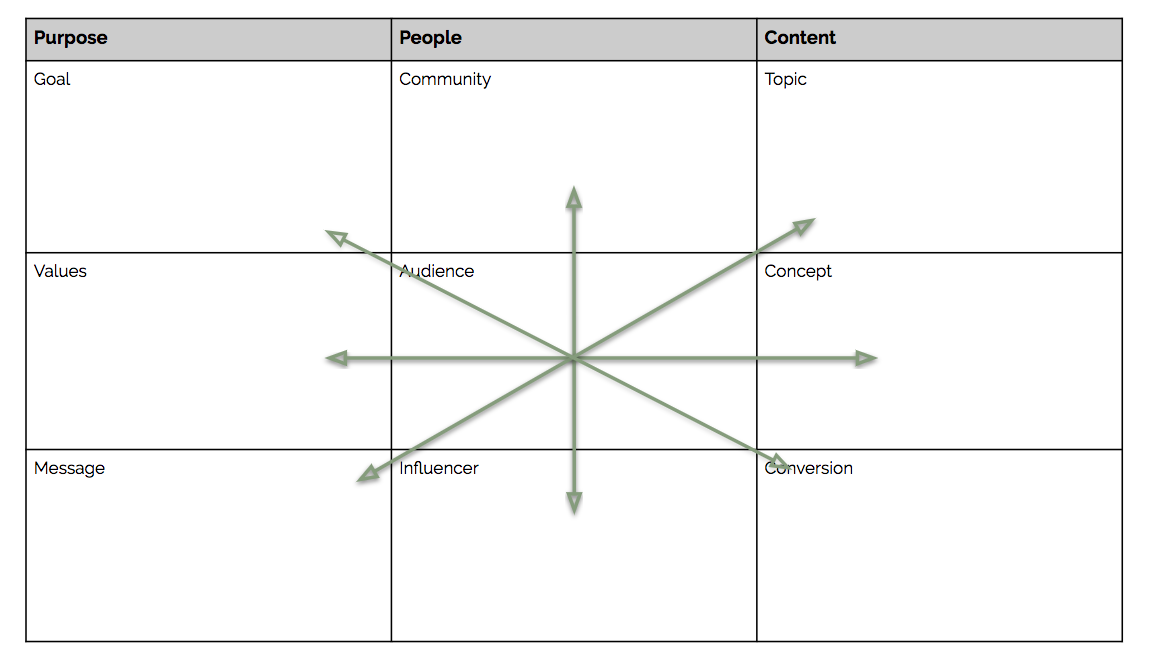
- Business Purpose corresponds with Content Conversion - i.e How do you ensure your content delivers on your business objective.
- Your Partners need to correspond with the Community - Partners give you access to your community, can give your credibility in that community, and help you with messaging and concept for the community.
- Your Values need to be expressed clearly in the creative Concept, this gives emotional consistency and depth to the campaign.
- Your Message is what you want to say, the Topic is what people are interested in talking about. Ultimately, you need to combine the two to ensure your message gets through in a way that's interesting a relevant.
- And at the centre of the canvas are your Audience. The reason we're doing the campaign is to get them to act, and so everything on the canvas should relate to them and what is most likely to work.
Working with the Canvas

Related Content

Book this Class
Google's 8 Habits of Effective Managers
Google's “people analytics” team conducted research to discover the roles and behaviours of the most effective managers at Google. These were distilled into 8 habits, and shared in Lazlo Bock's 2015 book "Work Rules!"
In 2002 Google tried to create a completely flat organisation - they got rid of managers, in an attempt to remove barriers to collaboration and rapid idea development. What the realised very quickly was that this approach achieved the opposite - decisions bottlenecked and chaos almost ensued.
This sparked an internal research project to discover the qualities of outstanding management at Google. After analyzing reams of data consisting of performance reviews, surveys, feedback and interviews, statisticians zeroed in on 8 key qualities, ranked in importance.
1. Be a good coach
- Provide specific, constructive feedback, balancing the negative and the positive.
- Have regular one-on-ones, presenting solutions to problems tailored to your employees’ specific strengths.
2. Empower your team and don’t micromanage
- Balance giving freedom to your employees, while still being available for advice. Make “stretch” assignments to help the team tackle big problems.
3. Express interest in team members’ success and personal well-being
- Get to know your employees as people, with lives outside of work.
- Make new members of your team feel welcome and help ease their transition
4. Don’t be a sissy: Be productive and results-oriented
- Focus on what employees want the team to achieve and how they can help achieve it.
- Help the team prioritize work and use seniority to remove roadblocks.
5. Be a good communicator and listen to your team
- Communication is two-way: you both listen and share information.
- Hold all-hands meetings and be straightforward about the messages and goals of the team. Help the team connect the dots.
- Encourage open dialogue and listen to the issues and concerns of your employees.
6. Help your employees with career development
7. Have a clear vision and strategy for the team
- Even in the midst of turmoil, keep the team focused on goals and strategy.
- Involve the team in setting and evolving the team’s vision and making progress toward it.
8. Have key technical skills so you can help advise the team
- Roll up your sleeves and conduct work side by side with the team, when needed.
- Understand the specific challenges of the work.
Three counter-productive behaviours to effective management
1. Have trouble making a transition to the team
- Sometimes, fantastic individual contributors are promoted to managers without the necessary skills to lead people.
- People hired from outside the organization don’t always understand the unique aspects of managing at Google.
2. Lack a consistent approach to performance management and career development
- Don’t help employees understand how these work at Google and doesn’t coach them on their options to develop and stretch.
- Not proactive, waits for the employee to come to them.
3. Spend too little time managing and communicating
Further reading on this...
Conducting a Customer Interview for Product and Marketing Insight
Doing a customer interview is one of the most efficient ways to gain insight to develop your product or the way you market it.
Doing a customer interview is one of the most efficient ways to gain insight to develop your product or the way you market it.
You book an appointment to meet a customer for 30 - 60 minutes, preferably not someone you know already but who would represent a real potential buyer of your product or service. The purpose of the interview is to try and understand if the problem you are trying to solve with your product is a problem the customer actually has. That's the problem validation or problem finding part of the interview. You also want to gain useful insight into how the customer buys your kinds of products or services, and how you can fit in with that (or improve that experience for them), and then talking pricing. A bonus is if you actually get an order, but that certainly isn't the point.
Following are two useful documents to help you get going on your first customer interviews.
Download the homework sheet for this assignment. The questions from this
Content & Community: The Bonfire, Wildfire, and Fireworks Strategy
To build an engaged community you need to give people reasons to keep coming back. Our Hot Topics framework does this. It uses a fiery metaphor to remind us about the 3 key drivers of community engagement.

To build an engaged community you need to give people reasons to keep coming back. Our Hot Topics framework does this. It uses a fiery metaphor to remind us about the 3 key drivers of community engagement.
🪵 Bonfires, are about consistent community engagement;
🔥Wildfires, are about surprising content experiments & breakthroughs;
💥Fireworks, are about promoted posts and guaranteed content winners.
We tend to combine all three when we’re considering a content strategy, as they all build on each other.

Let's explore each of these a bit more with some practical examples.
Bonfires
In the real world, a bonfire is a gathering point where we share stories, and have conversations that connect us. Digitally, a bonfire is about community engagement.
Digitally, Bonfire content is how you join the conversation. It’s all about who you follow, which hashtags you’re tracking. It’s about the community events and gatherings you contribute to. It’s about relevance and cultural resonance.
Consistency is key. You don't want the embers of conversation to die down, rather you want to keep people involved and engaged. You don't just drop content into your timeline randomly, each piece of content is produced as fuel for an ongoing conversation.
Momentum is key - you have to use energy to get it going, and then keep fuelling it. If you find a hot topic, don’t just post on it once, keep going.
Practically, we’re using hashtags to connect with broader conversations. We’re following and responding to influential voices in these conversations too. And we’re aiming to build trust and recognition over time. So consistency and momentum really are important here.
Bonfire content activities
Identify a theme, topic or community you want to build influence with;
Find and connect with the most influential voices on your topic or theme;
Stay on topic, and on-brand;
Build a consistent rhythm of posting on key themes and keep it up;
Respond and engage to posts on the topic with flair;
Focus on building lists, subscribers, and followers so you can more easily reach people when you need to activate them (for your Fireworks and Wildfire moments)
There is no hierarchy around a bonfire, but there can be leadership and influence.
Keywords: Connection. Community. Consistency. Content Calendar. Conversational Momementum.
Fireworks
Fireworks are spectacular, they can be seen far and wide.
Firework content is content you plan to succeed. The easiest way to guarantee a winner is through paid promotion, organic boosting (seeding to supporters), and content excellence.
We don’t hope our firework content performs well, we plan for it. We build up to it, time the release of it perfectly, promote it with paid media spend, and send it to our community directly and ask them to share it.
Each campaign should have at least one key piece of super-successful content around which the rest of the campaign is built. Often we have several: the launch video, mid-campaign rally, and wrap-video.
Timing is important with fireworks, all your influencers should announce the moment at the same time to create a trending topic.
Examples at Treeshake of this are campaign launch videos; our lists celebrating change-makers; and key announcements.
Firework content activities:
Pick the optimal date and time for your firework content.
Pick a hashtag so people can find each other on the theme.
Get in touch with influential people on the topic and secure their involvement before you launch.
Make it easy to participate: clear call to action, and compelling reason to get involved. You might event pre-produce content templates for your “influencers” (or social media volunteers) to use for their posts.
On the posting date (or date range) mobilise as many people to get onto social media and post at the same time using the hashtag.
Get a group of influencers/volunteers to spend time commenting or responding to people on the hashtag so that it’s really active.
Keywords: Cost. Calendar. Collaboration. Coordination. Conversion.
Wildfires
Wildfires spread fast, burn hot, and happen unpredictably. Digitally, it’s about content that “goes viral” and drives results and reach for your brand, message or movement.
On social media wildfire content is content that spreads from person to person and where ANYONE can contribute to the conversation, even if they don't know anything about the actual topic.
The keys to this kind of content are that it should be timely, unexpected, and taste-makers should get involved.
Wildfire content activities:
Create beautiful, surprising or super-relevant content regularly.
Wildfire content is often brave, experimental, or perfectly timed.
Follow the news and keep a look out for emotive pieces that you can create content about. Improve your taste as you learn what your people respond to.
Get fast and accurate in your copywriting and design so you can produce quality content really quickly in response to key news event.
Help your content spread by sending it directly to supporters, friends and influencers and asking them directly to share it.
Keywords: Creativity. Timing. Responsiveness. Surprise!
Related Classes









Is your brand smashable?
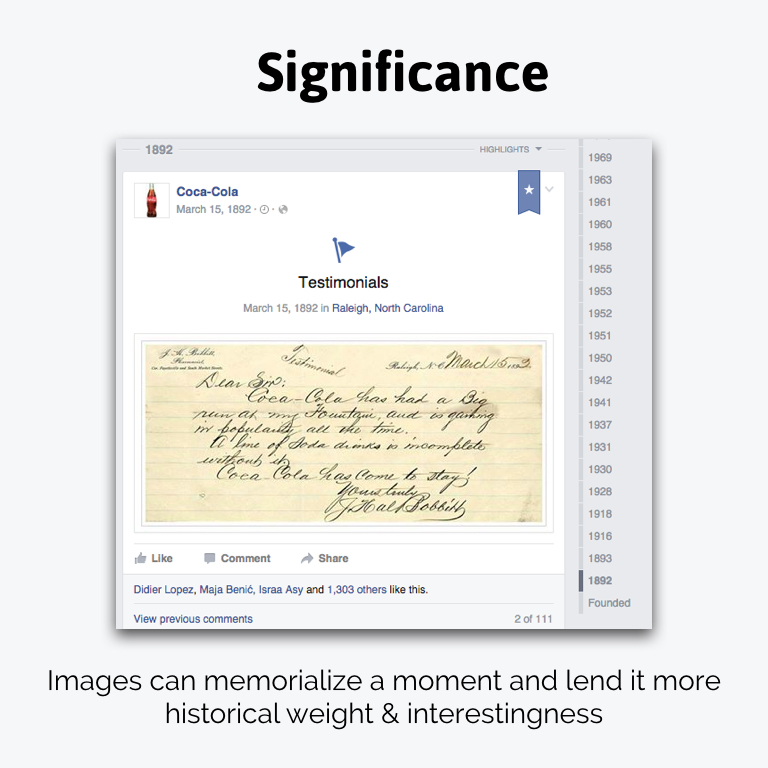
According to Martin Lindstrom, the best brands are Smashable. For example, if you saw a piece of a broken Coca Cola bottle, you'd probably be able to recognise it. Coca Cola is a "smashable brand", any part of it can lead us back to the source.

The "smashable brand" theory was developed by Danish author, and brand expert, Martin Lindstorm, who holds that the best brands are those that are smashable.
Lego is one such brand. Consider the humble Lego brick. Immediately recognisable, it's a brand icon. If you were to walk into a Lego movie by mistake there would be no doubt about the brand. It is a consistent experience in terms of visuals, tone, and even world-view. No matter how you encounter the brand, it is recognisable as a part of a bigger whole.
In the digital context, brands are smashed all the time. You see brand tweets and branded Facebook posts out of context. You scroll down the page and miss all the clever creative in the banner ads. You open a brand email, but only read the first half. People seldom get to experience the brand as a whole online.
This fragmented way of experiencing brands is problematic for both companies and consumers. Fragmented brands are ignored and forgotten. People experience a lot of clutter online - like shards of broken glass scattered in the environment - and it is off-putting.
How to tell if your brand is smashable on social media?
Consider whether your last few posts could just as well have been posted by your one of your competitors? In other words, if your brand's voice, character, purpose and community aren't coming through in a distinctive manner, then your brand is smashed, and not smashable.
You want to be visually consistent, tonally consistent, and most importantly: consistent in world-view. Lego, for example, stands for the power of productive play and the value of imagination. No matter where you encounter the brand, this is the prevailing world-view.
Examine your online advertising efforts. Is it well designed and compelling for the web, or is it just a shrunk print ad?
Level-up from being Smashed, to being Smashable.
Start paying attention to both the big picture and the details.
Big picture: What does your brand stand for, and why should people care?
Details: Is the look, voice, and feel consistent wherever people encounter the brand - every touch point, online, in-store, in-person, on Twitter, on-the-phone, the brochure and so on. All of these fragmented pieces represent you, and they should be instantly recognisable as a whole.

Email Newsletter Scheduling
Making sure your emails come when expected and wanted, including how often to mail, what time, and for what occassion.
Welcome Emails
When someone signs up for your email newsletter, or opts-in for email communications from you, the first thing you need to do is follow up, quickly, because they are expressing a current interest in what you have to offer.


According to the director of Epsilon’s strategic and analytic consulting group, welcome emails typically have the highest open rates of any marketing emails: 50 to 60%.
Furthermore, welcome emails see 3x more transactional revenue than regular promotional mailings.
Your email service provider (ESP) should have an automated confirmation of subscriptions email setting. You should check how long it takes for you to get your confirmation mail. If your ESP hasn't got servers near your customers, then perhaps use an ESP like Mandril that prides itself on delivering this kind of delivering this kind of automated email quickly.
The Welcome Series
After the welcome email, which may contain a confirmation link, it is often good idea to have a pre-prepared series of emails to initiate your subscribers to your list and offering.
A study from Campaign Monitor found that the first 6 emails you send get the highest engagement rate. So you should try make these emails extra-awesome, showcasing the best of what you have to offer.
Pay Flynn, from Smart Passive Income, recommends asking for engagement on roughly every 3 - 4 emails, as this keeps your audience primed for interaction without putting them off by asking for too much too often.

The welcome series of emails is automated. In addition to your normal bulk mailings, they will get an initial set of emails to initiate them to your content.
Email Frequency
More email means more sales, right? Actually, the more you mail people the lower your engagement rate per email.
After analysing over 2 billion emails, Campaign Monitor found that the optimal frequency is a mail every fortnight. However, the general advice is that you should ask your customers how often they want to hear from you, or do testing to see what frequency best suits your content.
What day of the week should you send your email?

Source: Demystifying the Inbox, Everlytic & Effective Measure, 2013






Learn to launch a spectacularly successful social media campaign.