

76 South African voices speaking up for the environment
Looking for the most influential voices in all aspects of the environment in South Africa? Here they are: the policy influencers, the entrepreneurs, the champions, the researchers and the media.
Looking for the most influential voices in all aspects of the environment in South Africa? Here they are: the policy influencers, the entrepreneurs, the champions, the researchers and the media.
By Bridget McNulty
The environment: one word, so many different facets. So much overwhelm. From climate change to conservation, air pollution to recycling, policy change to research, activism and sustainable energy. Where do you start? How can you do something about the greatest issue of our time? How does one voice make a difference when the problem is so vast?
Here are 50 ways that one voice can make a difference. Each of these South African voices on the environment have focused on one aspect that they care about deeply, and they are doing all they can to fight for it. We focused on the people behind the issues so that you can know who is driving change, and how to connect to them. We encourage you to actively support and follow the people on this list: that’s why we’ve included their social media handles.
A uniquely South African perspective
Why should you care? Because this is your problem. My problem. Our problem. Environmental issues have historically been seen as an elite concern in SA, but that is no longer the case. The urgency and scale of the problem has pushed it to centre stage. South Africa has warmed at twice the global average. The people who have the least are going to be affected the most. It’s happening already: the impoverished residents of the town of Makhanda (in the Eastern Cape) hit Day Zero on the 12th July 2019. It just didn’t make front page news.
There are other stats that should be making front page news, and aren’t. SA’s annual carbon emissions are 70 million tons higher than the UK. The Moody’s report on climate collapse singled out Brazil, Russia, India, China and South Africa (in that order) as the countries whose economies will suffer the most if climate change isn’t curbed. Around the world, climate disasters are now occurring once a week, according to a special representative of the UN secretary-general.
We’re at a tipping point
Now is the time for change. The amount of carbon dioxide in the atmosphere hit its highest level in human history in June 2019 (414.8 parts per million): a three million year peak. “The world is at a tipping point,” writes Lois Young, the chair of the Alliance of Small Island States, in the Financial Times. “We are at a moment in history where we can and will go one of two ways: towards climate disaster or a safer planet for all.”
There is hope, of course. Hope that has been backed by science. The IPCC special report on climate change outlines exactly what we need to do. The two targets are: global carbon emissions reduced by 45% by 2030 (11 years’ from now) and to net zero by 2050. The scary part? South Africa has picked neither target.
The social and environmental impacts of climate change
Cape Town’s drought last year was a stark illustration of climate change for many. The warning that many parts of Africa are hotspots for climate change became not just a concept, but a reality. Clean water flowing out of a tap was seen as the miracle it is - when we feared it would be taken away, we suddenly realised what a precious resource it had always been. Once we can see the social and environmental impacts of climate change, we can work to make the necessary changes. But the first step in protecting the environment - as with anything in life - is understanding. Deep, personal understanding. That’s what the voices on this list have, and what we all need to attain.
Our constitutional right
South Africa has one of the only constitutions in the world that guarantees citizens the right to a clean environment. Here it is, direct from our constitution:
Everyone has the right –
(a) To an environment that is not harmful to their health or well-being; and
(b) To have the environment protected, for the benefit of present and future generations, through reasonable legislative and other measures that –
(i) prevent pollution and ecological degradation;
(ii) promote conservation; and
(iii) secure ecologically sustainable development and use of natural resources while promoting justifiable economic and social development.
We need to ensure our constitutional right is fulfilled. By highlighting those who are speaking up for the environment in South Africa, we hope to inspire other South Africans, ordinary South Africans like you and me, to join them in their efforts.
Follow them, support their work, add your voice to their voice. This is a rallying cry for the environment: an invitation to set aside the overwhelm and focus on what you really care about. The air you breathe. The ground you stand on. The future.
50 76 South African voices speaking up for the environment
The Policy Influencers
Debra Roberts

Debra Roberts is currently head of the Sustainable and Resilient City Initiatives Unit in eThekwini Municipality (Durban). She established the Environmental Planning and Climate Protection Department of the same municipality and she is Co-Chair in the Intergovernmental Panel on Climate Change’s (IPCC) Sixth Assessment cycle: the first time in the history of the IPCC that there has been an SA Co-Chair and the first woman from Africa to hold such a position. She is currently an advisor to the Global Commission on Adaptation, United Cities and Local Governments (UCLG) and the United Nations Secretary General’s 2019 Climate Summit. She is on Apolitical’s inaugural list of the World’s 100 Most Influential People in Climate Policy.
Mark New (@marknewacdi)

Mark New is the director of the African Climate and Development Initiative (ACDI) at UCT, and has been listed among the World’s 100 Most Influential People in Climate Policy. His research career spans over 20 years, with a focus on detecting climate trends, climate modelling and assessing the impact of failed climate mitigation policy. He won the Piers Sellers Prize for his world-leading contribution to solution-focused climate research.
Tanya Abrahamse

Tanya Abrahamse is currently Chair of the Global Biodiversity Information Facility (GBIF) Governing Board, a panel member of the UN Environment’s International Resources Panel (UN IRP), Deputy Chair of the Board of South African Tourism, a member of SA National Parks board, a trustee of the Women’s Development Bank (WDBT), and a founding member of the board of the Mapungubwe Institute (MISTRA) — a South African think tank. She previously was on the task team to form Future Earth — a global platform of science for society and sustainability — and was a member of the inaugural Science Advisory Board of the UN Secretary General (UNSAB).
Kerry Sink (@KerrySkink)
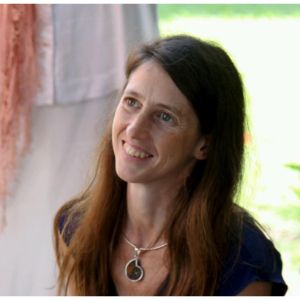
Kerry Sink is a marine biodiversity scientist and science to policy practitioner. She is the SANBI Marine Programme Manager and initiated SASSI (the WWF Southern African Sustainable Seafood Initiative). She was awarded the WWF South Africa Living Planet Award in 2017 for her contribution to decisive government planning, policy and management in the marine environment.
Alex Lenferna (@AlexLenferna)

Alex Lenferna works as South African Climate Justice Campaigner for 350Africa.org. He is a Fulbright and Mandela Rhodes Scholar who has written and researched widely on climate justice, and recently completed a PhD on climate justice at the University of Washington. Alex has served in climate justice advocacy roles within organised labor, student, and grassroots climate justice.
Bobby Peek (@bobby_peek)

Bobby Peek is the director of groundWork, a non-profit environmental justice service and developmental organisation. Environmental justice is about power relations and ensuring that there is equity amongst all people. From Bobby's first experience of corporate power (used against his community of Wentworth, South Durban), he has been driven to seek ways of creating true democracy as the basis of environmental justice in SA.
Jane Cherry (@janecherry_tree)

Jane Cherry is a climate justice and food sovereignty activist. She is the Executive Manager of COPAC (Co-operative and Policy Alternative Centre) and has worked on activist tools (seed saving, water sovereignty, a People’s Food Sovereignty Act and sustainable land use). She has organised national events for food sovereignty and climate justice. COPAC is currently undertaking a process with civil society to develop a People's Climate Justice Charter for South Africa.
Happy Khambule (@hkhambule)

Happy Khambule is a senior political advisor to Greenpeace Africa. He is an official party delegate to the UNFCCC (United Nations Framework Convention on Climate Change) and negotiates Response Measures for South Africa at the international climate change negotiations. Happy is a former board member of Fossil Free South Africa, and holds an EESI (Environmental Entrepreneurs Support Initiative) fellowship that built his capacity as a policy drafter.
Noëlle Garcin (LinkedIn)

Noëlle Garcin is the African Climate Reality Leader Coordinator at Food & Trees for Africa and the Action24 Project Manager. She works with the African Climate Reality Project to coordinate a network of 25 coalitions of over 550 civil society organizations across 25 countries. Action24 is a 30-month action co-funded by the European Union, aimed at strengthening environmental governance and civic participation, in order to advance decarbonised sustainable and inclusive development in South Africa.
Lebo Molefe (LinkedIn)

Lebo Molefe is the Director Air Quality and Climate Change in the Environment and Infrastructure Department in the City of Johannesburg. She’s responsible for the issuance of Air Quality Licensing and Permits to industry as prescribed by the National Environment Management: Air Quality Act. In her role in climate change, she is driving climate mainstreaming in the City of Johannesburg and is currently working towards completing a Climate Action Plan: a City of Johannesburg demonstrable commitment to the Paris Agreement that will ensure that the City of Johannesburg is positioned as a Global Mega City.
Alia Kajee (@JustMissAlia)

Alia Kajee currently works as an advisor implementing projects in the South African National Climate Change Response Policy. She intends to mainstream climate justice through policy, participation and practice. With an emphasis on the disproportionate impacts of climate change divided along class, racial and gendered lines, viewing the climate crisis as a fundamental injustice is critical. As a Muslim, Alia draws from a faith based perspective in standing firm for justice as a duty on this earth for people and for the planet. An eco-socialist at heart she believes in people power as the anchor in bringing about a democratic and sustainable future for all.
Ferrial Adam (@ferrial_adam)

Ferrial Adam is an environmental justice activist who has worked on energy and water issues for more than 15 years and serves as the Chairperson of the board of OUTA (Organisation Undoing Tax Abuse). She is presently working on her PhD looking at activist science and environmental justice.
Neoka Naidoo (@neokanaidoo)

Neoka Naidoo is a technical advisor at GIZ working on Strategic Partnerships for the Implementation of the Paris Agreement (SPIPA) in South Africa. She is interested in policy and development to shape future decisions in an integrated way. Neoka is engaged with her studies at the Sustainability Institute through Stellenbosch University for an MPhil. She published an essay in a book called Feminism Is: South Africans Speak Their Truth.
Melita Steele (@Melita_Steele)

Melita Steele is Greenpeace Africa's Senior Climate and Energy Campaign Manager, and she is responsible for managing the campaign team and leading the strategic development and implementation of the campaign. Melita completed her MSc in Environmental Science at Rhodes University in 2008, and in 2011 she was named as one of the Mail and Guardian's Top 200 young South Africans. Her main focus is on campaigning for the urgent Just Transition away from fossil fuels towards renewable energy in South Africa in response to the climate crisis, which she believes is an existential threat for humanity.
Ndivile Mokoena (@MokoenaNdivile)

Ndivile Mokoena is a member of the Women & Gender Constituency (WGC) under the UNFCCC, and started following the process with COP17, representing Women in Energy and Climate Change Forum under the auspices of Earthlife Africa and GenderCC Southern Africa (WGC) of the UNFCCC. She has been taking part in the WGC since then and is currently the global south co-focal point of women and gender constituency in the UNFCCC processes. Ndivile is also very active as the coordinator of another international project called “Gender into Urban Climate Change Initiative” at the COP.
The Entrepreneurs
Lauren Hermanus (@laurenhermanus)

Lauren Hermanus is the director of Adapt, a platform to convene the right team of thinkers and doers from a network of sustainable development professionals. She has 10 years of experience in sustainable development research and practice, working in the private and public sectors, academia, with NGOs, focused on sustainable energy innovation, urban resilience and green economic development.
Chad Robertson (@CR_10)

Chad Robertson is a social entrepreneur and the co-founder and CEO of Regenize, a recycling initiative he created with his partner and fellow recycling evangelist Nkazimlo Miti. Regenize is a residential recycling solution that’s on a mission to make recycling more accessible, inclusive and rewarding. They reward people for recycling, educate youth through their Regenize Education programmes, and researches new ways to reuse waste. They collect, educate and transform waste.
Nonhlanhla Joye (@UmgibeCreator)

Nonhlanhla Joye is the founder of Umgibe Farming Organics & Training. This carbon-saving, ecological-organic, income generating vegetable programme provides a platform to market vegetables grown by grassroots farmers from the sub-economic townships of KwaZulu Natal. She is passionate about food security, the implementation of SDGs and creating a thriving economy.
Photo credit: Beautiful News
Khululekani Nyobole (LinkedIn)

Khululekani Nyobole is an eco-friendly entrepreneur who started Nurturer, a range of personal care and cleaning products created for all South Africans. Nurturer develops premium natural products for family, home and businesses. Their products are affordable, local, earth-friendly, and 100% of their profits are donated to a youth development NPO, Salesian Life Choices.
Mao Amis (@MaoAmis)

Mao Amis researches and consults on various sustainability issues globally. Recently, he has focused on building leaders for the green economy, and how green entrepreneurship can be used to alleviate poverty, and lead the transition to low carbon, resource efficient economies in Africa. He is the founder and Executive Director of the African Centre for a Green Economy (AfriCGE), a non-profit think tank.
Ian Dommisse (@EcoBrickXchange)

Ian Dommisse is a social entrepreneur and architect curious about alternative, environmentally friendly construction methods. He founded The EcoBrick Exchange (EBE), a recycling non-profit, which promotes the building of pre-schools and structures of value using up-cycled plastic waste. Using EcoBricks as a catalyst to nurture environmental awareness and responsibility, the EBE improves the schooling environments of children.
Robyn Smith (LinkedIn)

Robyn Smith is the owner of Faithful to Nature, South Africa’s largest green online shop with the vision of becoming ‘Africa’s Green Amazon’. They were one of the first companies worldwide to create and implement a very strict ingredient policy that determines which products they sell. This policy is their DNA, and is designed to empower their customers on their journey towards ethical consumption.
Andrew Muir (LinkedIn)
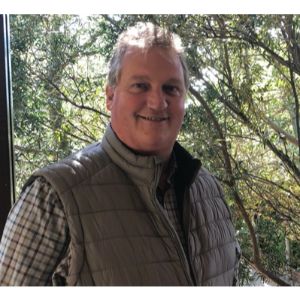
Andrew Muir is CEO of both Wilderness Foundation Africa and Wilderness Foundation Global. He is one of South Africa’s most influential conservationists and social entrepreneurs. Andrew has regularly been nationally and internationally recognized for his success in integrating conservation programmes with social and development interventions, and is a Schwab Foundation Fellow of the World Economic Forum.
Rhian Berning (@EcoAtlas)
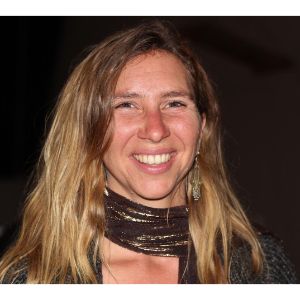
Rhian Berning is an environmental activist and visionary. She is the founder of Eco Atlas in South Africa, an online platform which empowers active citizens with the information needed to vote with their daily choices for a better world. Rhian also initiated the Renew Able Plett campaign which looks at reducing waste to landfill and creating local circular economy opportunities. She was recently awarded the Eco-Angel Award in the prestigious South African Eco-Logic Awards.
Karoline Hanks (Instagram)

Karoline Hanks is a passionate anti-SUP (Single Use Plastic) campaigner, and has been spear-heading a campaign against the use of plastic water sachets in road running in South Africa for over five years. She started a small business three years ago (called SUPA) making single-use plastic alternative products, which has grown from strength to strength, and which upskills a small sewing group in Masiphumelele.
Dorah Marema (maremadorah)

Dorah Marema is the President of GenderCC's board and one of the founders of GenderCC Southern Africa. Previously, Dorah was the Executive Director of the GreenHouse Project, an environmental NGO based in Johannesburg that demonstrated how to live sustainably in poorer areas of Johannesburg. Other programme areas include green building and design, efficiency and renewable energy, waste management and recycling projects. She is currently implementing a range of projects in the region and is GenderCC’s Focal Point in Africa.
Colin Bell (LinkedIn)
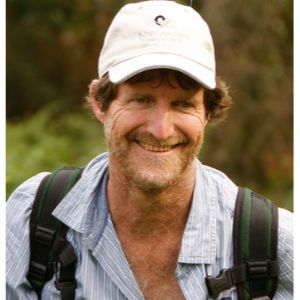
Colin Bell has worked in conservation since the early 1980s, when he co-founded Wilderness Safaris with Chris McIntyre. Over the decades, Wilderness grew to manage camps and lodges across seven countries and employed more than 2,500 people. Many of these lodges gained their “bush cred” through partnerships with local communities. During this time, he initiates the process that resulted in the successful reintroduction of both black and white rhino back into the wilds of the Okavango Delta. He then went on to co-found Great Plains Conservation and publish and co-author Africa’s Finest. This lays the foundations and principals for responsible, sustainable tourism – the Green Safari model.
Catherine Morris (@GREENHOMESA)

Catherine Morris is the founder of GREEN HOME: South Africa’s first and to this day, only completely compostable food packaging company. GREEN HOME creates a range of plant-based, environmentally-friendly food packaging, and they are proudly carbon neutral. They offset their emissions by supporting a low-carbon housing development in Kuyasa, one of the most vulnerable corners of Khayelitsha. The project lowers greenhouse gases by providing low-carbon technologies for homes. These save locals money, improve air quality by reducing paraffin use and also create much needed jobs and skills training in the area.
The Champions
Lewis Pugh (@LewisPugh)

Lewis Pugh is an ocean advocate, endurance swimmer and the UN Patron of the Oceans. He pioneers swims in the most vulnerable ecosystems on earth to campaign for their protection. Lewis has been instrumental in protecting over 2 million square km of vulnerable ocean – an area the size of Western Europe. He is a Young Global Leader of the World Economic Forum and one of National Geographic’s Adventurers of the Year.
Hanli Prinsloo (@hanliprinsloo)

Hanli Prinsloo is a Freediver and Ocean Conservationist. She is the founder of the I AM WATER Foundation which focuses on ocean conservation through human experience. I AM WATER works with underserved / low income coastal communities to introduce young people to the ocean. She holds 11 national records in competitive freediving and is a Young Global Leader of the World Economic Forum.
Aaniyah Omardien (@AaniyahOmardien)

Aaniyah Omardien is the founder of The Beach Co-op, an NPO which cleans beaches, and a Conservation Consultant. Aaniyah focuses on work that connects people and nature. She worked for WWF SA from 2001 to 2010, where she helped start and eventually managed WWF’s Marine Programme. Alongside her Beach Co-op work, she consults to WWF SA on single-use plastics.
Tasneem Essop (@TasneemEssop)

Tasneem Essop is is the founding director of the Energy Democracy Initiative. Prior to this, she headed the climate work in WWF International. She is also a commissioner in the National Planning Commission of South Africa. Before joining WWF in 2008, she held the positions of provincial minister of the environment, planning and economic development in the Western Cape.
Ray Jansen (LinkedIn)

Ray Jansen is the Chairman of the African Pangolin Working Group and a member of the IUCN Species Survival Commission Pangolin Specialist Group. He is a Full Professor in the Department of Environmental, Water and Earth Sciences at the Tshwane University of Technology and supervises post-graduate students working on African pangolin ecology, their use in traditional medicine and their prevalence in the bushmeat markets of West and Southern Africa.
Ruby Sampson (@AfrClimAlliance)

Ruby Sampson is an 18-year-old climate activist who helped create the African Climate Alliance in order to unite climate activists across the continent in the fight for climate action. Ruby has been holding presentations, educational days and poster-making sessions to raise awareness and prepare students for the future, while encouraging them to attend the termly strikes across South Africa.
Ian Little (@TheEWT)

Ian Little began his career as the manager of the Endangered Wildlife Trust’s Threatened Grassland Species Programme. His PhD in Conservation Biology at UCT focused on threatened species conservation and ecology, especially linked to agricultural management and restoration. He is now Senior Manager for Habitats at EWT and oversees strategic conservation planning for terrestrial landscapes across SA.
Christine Colvin (@ColvinH2O)

Christine Colvin is the Freshwater Senior Manager for the World Wide Fund for Nature (WWF) SA. Christine leads WWF-SA as they seek to provide water security throughout the region. Since working with the WWF, she has launched a number of successful initiatives that include Water Source Areas and Water Stewardship programmes, as well as the Journey of Water Campaign aimed at connecting people to where their water comes from.
Sharon Pollard (LinkedIn)

Sharon Pollard is the Executive Director at the Association for Water and Rural Development (AWARD), conducting pioneering research and advocacy work around water supply in underprivileged areas in South Africa. She has managed many internationally recognised projects and focuses on planning for meeting water requirements for sustaining ecosystems.
Jay Naidoo (@Jay_Naidoo)

Jay Naidoo was part of Nelson Mandela’s Cabinet and served as Communications Minister until 1999. He now serves as a trustee of the Earthrise Trust and works with communities of evicted farmworkers to build democratic practice of innovative development models for thriving, sustainable and peaceful communities. Their goal is to build resilience to climate change and tackle the challenges of livelihoods and hunger.
Louise de Waal (@GreenGirlAfrica)

Louise de Waal works as an independent sustainable tourism consultant with specific interest in wildlife and conservation. She is the driving force behind the #HandsOffOurWildlife campaign, which aims to create greater awareness around issues of unethical and even cruel captive wildlife interactions by educating the public and the tourism industry at large.
Lazola Solani (LinkedIn)

Lazola MaDuka Solani is a young proud Xhosa womxn who is making a difference in her community through creative environmental activism specially targeted at the youth of South Africa. Clean Our Hoods is an anti litter campaign in Mfuleni and Vrygrond (two townships in Cape Town), creating a series of events that engages townships in conversations on litter while encouraging to clean our public spaces in fun and interactive ways.
Justin Bonello (@Justin_Bonello)

Filmmaker, father, cook, traveler, urban farmer and author Justin Bonello is the director and founder of Neighbourhood Farm, a social enterprise that is sowing seeds to change the Urban Living Philosophy by giving children and community members real edible education. “Social enterprise, underpinned by a mosaic of urban farms, can help all Capetonians, from school children to grandparents, to create a living legacy for our children’s children,” he says.
Courtney Morgan (LinkedIn)

Courtney Morgan is an eco-feminist currently working in climate justice activism and food sovereignty with COPAC (Co-operative and Policy Alternative Centre). She is particularly interested in the gendered experiences of climate change and poverty and has a BSc Honours degree in Human Geography from Wits University.
Kumi Naidoo (@kuminaidoo)

Kumi Naidoo is a South African-born human rights activist of Indian descent who is the current Secretary-General of Amnesty International. Kumi was the first African head of Greenpeace, an international environmentalist group, serving as its International Executive Director from 2009 to 2015.
Makoma Lekalakala (makomaphil)

Makoma Lekalakala is a South African activist who is the director of the Johannesburg branch of Earthlife Africa, an NPO that seeks a better life for all people without exploiting other people or degrading their environment. They encourage and support individuals, businesses and industries to reduce pollution, minimise waste and protect our natural resources. Along with Liz McDaid, Makoma was awarded the 2018 Goldman Environmental Prize for the African region for their work on using the courts to stop a Russian-South African nuclear deal in 2017.
Hayley McLellan (hayleymclellan3)

Hayley McLellan is the Environmental Campaigner for the Two Oceans Aquarium in Cape Town as well as a 5 Gyres Ambassador. As an animal behaviourist for most of her career she became unbearably aware of the degradation of the environment due to plastic pollution. She created the Rethink the Bag campaign – for a plastic shopping bag free South Africa. The campaign was officially launched as an environmental campaign of the Aquarium in 2011. Hayley is an experienced presenter engaging with all sectors of society to address behaviour change in order to become plastic shopping bag free zones.
Xoli Fuyani (@XoliF)

Xoli Fuyani is an environmental education coordinator and eco role model who guides young people to a safe sustainable green future. She worked for Eco-schools as a coordinator for 11 primary schools in Gugulethu and volunteered with Pride of Table Mountain, leading youth on excursions on Table Mountain to grow their knowledge of their environment. She also facilitated a WESSA Adopt-a-beach programme, teaching learners from Gugulethu about conservation of the coastal environment. Xoli now works with Earthchild Project, coordinating the Environmental Education in their Schools’ Programmes. She also runs the Young Women’s Group, Hiking Clubs and Worm Farming Clubs.
Morné du Plessis (plessis_morne)

Morné du Plessis is the chief executive officer of WWF South Africa. Throughout his tenure, Morné has served on a large number of committees and boards of conservation NGOs, government funding allocation committees and academic institutions, including the Green Trust, Leslie Hill Succulent Karoo Trust, National Parks Trust, Table Mountain Fund, Stellenbosch Institute for Advanced Studies and Mammal Research Institute (University of Pretoria). He has authored or co-authored over 50 scientific publications in the fields of conservation biology and behavioural ecology and published two books, earning the National Research Foundation’s President’s Award.
Michele Pickover (LinkedIn)

Michele Pickover has been campaigning on behalf of animals for the past 20 years and is a campaigner for inclusive justice. Much of her contribution has been through lobbying, campaigning, research and investigative work as well as national and international networking and liaison. She is currently the Director of the EMS Foundation, an NGO which focuses on the commonalities of oppression working for the advancement and protection of the rights and general welfare of children, elderly persons, wild animals and other vulnerable groups. Michele wrote a pioneering book called Animal Rights in South Africa.
Audrey Delsink (@back2wild)

Audrey Delsink Kettles is the Wildlife Director of Humane Society International/Africa. She oversees HSI’s wildlife campaigns in Africa, including work to champion the protection of wildlife. She is also responsible for HSI’s Back to the Wild program, which facilitates the release of compromised indigenous wildlife back to protected preserves. Audrey has acted as the Field Director for the world-renowned African Elephant Immunocontraception Program since 2000. She has been actively involved in both national, provincial and private elephant management, and together with the immunocontraception research team, has helped to shape policy and legislation regarding wild African elephants in South Africa.
Michelle Henley (@elephantsalive)

Michelle Henley is the co-founder of Elephants Alive, whose mission is to ensure the survival of elephants and their habitats and to promote harmonious co-existence between elephants and people. She has published numerous articles in in peer-reviewed scientific journals, popular publications and has contributed towards various books. She has also written and illustrated children’s books on elephant conservation. Michelle is a registered Post-doctoral Fellow at the Applied Behavioural Ecology and Environmental Research Unit of the University of South Africa and a Trustee of the Elephant Specialist Advisory Group of South Africa. She has won numerous awards for her inspiring work.
Candice Mostert (LinkedIn)

Candice Mostert is the founder of Waste-ED, an organisation implementing waste to resource systems that explore the journey to zero waste, while developing and applying environment based waste management solutions and education. She offers interactive zero waste set ups, consulting, research, workshops and presentations. Along the way, she collects Ecobricks and creates much needed, well insulated structures teaching the skill of natural clay building. Candice worked with Greyton Transition Town to build the first known South African Ecobrick outdoor classroom and revive the concept of value in our wasted resources.
The Researchers
Raj Lalloo (LinkedIn)

Raj Lalloo is Chief Scientist at CSIR Biosciences and Chief Technical Officer at OptimusBio, a CSIR spin-out company specializing in biodegradable and biologically active products for the green economy. He is a recognized specialist in the field of bioprocess and product development and has written more than 300 research reports, 5 publications, 2 patents, 3 book chapters and has trained more than 100 students.
Coleen Vogel

Coleen Vogel is a climatologist, adaptation and sustainability specialist at the Global Change Institute at the University of the Witwatersrand. She was one of the Chapter Lead Authors of the Africa Chapter for the Intergovernmental Panel on Climate Change, IPCC 4th Assessment Report and was also an author of the Synthesis Report for Policy Makers of the 4th IPCC Assessment Report. A Nobel Peace Prize was awarded to the author team together with Al Gore for the 4th Assessment Report. Coleen was a Chapter Author on Human Security for the 5th IPCC assessment report. Coleen is also working with the DEFF and the City of Johannesburg on climate change adaptation and with young change agents on climate change.
Francois Engelbrecht (LinkedIn)

Francois Engelbrecht is a principal researcher at the Global Change Institute at the University of the Witwatersrand, where he leads the Climate Studies, Modelling and Environmental Health Research Group. He has published widely in the fields of climate modelling and the projection of future climate change over Africa.
Gina Ziervogel (@GinaZiervogel)

Gina Ziervogel is an Associate Professor in the Department of Environmental and Geographical Science at UCT. Her work has focused on climate change adaptation, resilience and development through the lens of water and governance. Gina has published widely and been involved in national and international initiatives related to climate change adaptation, including the recent IPCC Assessment Report 6. She is the co-author of Day Zero – One City’s Response to a Record-breaking Drought with Leonie Joubert.
Bob Scholes (LinkedIn)

Bob Scholes is a systems ecologist at the Global Change Institute at the University of the Witwatersrand, with a particular interest in the savannas of Africa. He is among the top 1% of environmental scientists worldwide based on citation. He has led several high-profile studies and large research campaigns and was an author of the IPCC 3rd , 4th and 5th assessments. He is an NRF A-rated scientist, and a winner of the National Science and Technology Forum Lifetime Contribution to Science Award.
Philile Mbatha (LinkedIn)

Philile Mbatha is a lecturer at UCT who works within the fields of environmental sustainability and human geography. Her research has a specific focus on rural contexts along the coast. She also has vast experience in the research field working with rural/economically poor and marginalised communities. She is interested in human rights debates connected to marine and coastal governance processes impacting rural areas in South Africa.
Harald Winkler (@HarryWinkler)

Harald Winkler is a Professor at the Energy Research Centre at UCT and an internationally acclaimed researcher, as rated by the National Research Foundation. His research has informed energy and climate policy at the national level and multi-lateral negotiations. Harald led the research work underpinning South Africa’s Long-Term Mitigation Scenarios (LTMS), and developed the proposal of sustainable development policies and measures (SD-PAMs). He was an author on the IPCC 4th, 5th and 6th reports.
Zarina Patel

Zarina Patel is a senior lecturer at UCT whose research is concerned with the multiple dimensions of the meaning and practice of sustainable development at the city scale. This agenda is driven by evidence that the poor and the natural environment continue to be marginalised in decision making. Using an engaged and applied approach to research, her concern with the justice implications of the gap between policy and practice have focussed on the three themes of urban knowledge, urban governance and tools for decision making.
Godwell Nhamo
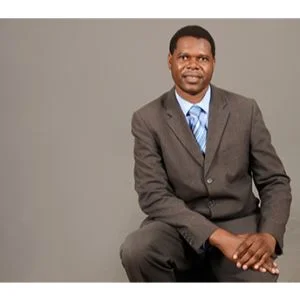
Godwell Nhamo is a Full Professor and Exxaro Chair in Business and Climate Change at the University of South Africa (UNISA). He has published widely in the areas of Climate Change and Governance, Green Economy and Sustainable Development, including 6 books (5 edited) and over 70 journal articles. Godwell sits in a number of international and national boards and has received several awards and recognitions. He is one of the four-member African Union High Level Panel drafting the Green Innovation Framework for the continent.
Guy Midgley (LinkedIn)

Guy Midgley is an internationally acknowledged expert in the field of biodiversity and global change science. He is an A-rated researcher and has been lead author on the 4th, 5th and 6th IPCC reports. He has led and contributed to several policy-related government reports and collaborated internationally on global change research themes in Chile, Australia, USA, UK, Germany, France, Botswana and Namibia. Guy has authored/co-authored more than 160 scientific and popular publications.
Jackie King

Jackie King is an aquatic ecologist who was a researcher, lecturer and supervisor of postgraduates at the University of Cape Town for almost four decades. She now owns and runs Water Matters, a water-resource consultancy specialising in the science of integrated flow management of rivers, and is an internationally-recognised leader in the field. Jackie recently won the prestigious international 2019 Stockholm Water Prize: she is only the fourth woman in the world to be awarded this prize, considered the Nobel Prize for water. She presently serves on the Board of Directors of WWF-SA and the Research Advisory Panel of South Africa’s Council for Scientific and Industrial Research (CSIR). She serves as a Senior Scientific Advisor to the International Crane Foundation and as a member of AAAS’s global project Water in our Future.
The Media
Sipho Kings (@SiphoKings)

The Mail & Guardian’s Environment Reporter for six and a half years, Sipho Kings has been one of the loudest voices for the environment in SA. A 2018 Nieman fellow at Harvard University, he is now the News Editor at the Mail & Guardian, and has just written a book with Sarah Wild: South Africa’s Survival Guide to Climate Change, which breaks down the issue into digestible chunks.
Leonie Joubert (@LeonieJoubert)

Leonie Joubert is a South African author who uses storytelling to grapple with tough issues: climate and environmental change, energy policy, cities as development hubs and more. She writes for the Daily Maverick, HBF Energy Transitions and Business Day, amongst others, and her journalism has been multiply awarded. She is the co-author of Day Zero – One City’s Response to a Record-breaking Drought with Gina Ziervogel.
Kia Johnson (@KiaJohnson1)
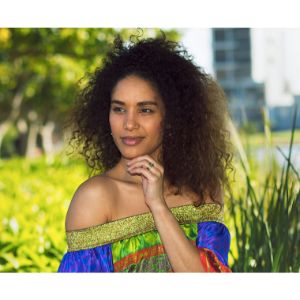
Kia Johnson hosts the Smile90.4FM Sunday morning show, and is an Ambassador for WWFSA, the World Wide Fund for Nature. She is actively involved in environmental campaigns, and won the ‘Most Influential #PlasticFreeMzanzi Campaigner’ for 2019. Through the Mycelium Media Colab, she uses storytelling to create awareness around the environment and creating a healthier world.
Sarah Wild (@sarahemilywild)

Sarah Wild is a “journalist, scribbler, ranter, tea-drinker, and (occasional) author.” Her work has appeared in AfricaCheck, Nature, Quartz, New Scientist, the Guardian, the Atlantic, Research Africa, Business Day, Undark Magazine, and the Mail & Guardian, amongst others. Her most recent book, South Africa’s Survival Guide to Climate Change, was written with Sipho Kings.
Kelvin Trautman (@kelvintrautman)

Kelvin Trautman is a self-taught photographer and filmmaker. His work focuses on narrative driven content, where he uses travel, sport, and pioneering expeditions as a lens to look at human and environmental conditions. He has covered assignments on all 7 continents and his images have appeared in the New York Times, National Geographic, Red Bulletin, and Outside Magazine.
Jackie May (@twygMAG)

Jackie May is the founder and editor of Twyg, a website with stories about fashion, food and places that don’t harm the planet and people. “We can no longer ignore climate change, nor can we pretend that we are not to blame. Twyg wants to play a part in the solution by telling stories about how to lighten our tread,” she says. Jackie’s focus is on exploring ways we can live well now while ensuring a better future.
Kevin Bloom (@KevBloom)

Kevin Bloom is a writer and journalist who frequently writes about environmental issues as Senior Correspondent for the Daily Maverick. He is the co-author of Continental Shift: A Journey into Africa’s Changing Fortunes and author of Ways of Staying, shortlisted for the 2010 Alan Paton Award.
Adrian Steirn (@AdrianSteirn)

Adrian Steirn is a photographer and filmmaker who believes that conservation and humanity are inextricably linked. In his capacity as photographer-in-residence for WWF South Africa, Steirn has worked to promote and engage with wildlife conservation, using visual images as a means to stimulate discussion and action around key issues such as poaching. Adrian is the creator of Beautiful News, which celebrates the extraordinary fabric of human nature that binds our nation and drives individuals towards active citizenry. Adrian was recently awarded the Commonwealth Points of Light award from the Queen of England for his voluntary efforts to campaign for wildlife conservation.
Don Pinnock (@DonPinnock)

Don Pinnock is a writer, investigative journalist, and photographer. He has been an electronic engineer, lecturer in journalism and criminology, consultant to the Mandela government, a professional yachtsman, explorer, travel and environmental writer and photographer, and was the former editor of Getaway magazine in Cape Town. One of his passions is species conservation in Africa.
Ian Michler

Ian Michler has spent the last 29 years working as a specialist guide, safari operator, photo-journalist and consultant across Africa. His writing focuses on the continents conservation and environmental challenges and he is the author and photographer of seven natural history and travel books. He is the Lead Character, Researcher and co-campaign leader for the feature documentary Blood Lions and a Director of Eden to Addo. He currently runs Invent Africa Safaris and is enrolled as a part-time student at the Sustainability Institute, Stellenbosch University.
Elise Tempelhoff (@elisetempelhoff)

Elise Tempelhoff is an award-winning environmental journalist, with a focus on water, biodiversity and climate change. She writes for her own website ‘Wat op Aarde?’ as well as for Beeld and Netwerk24. She is considered an authority on poaching, endangered species and elephants.
Ian McCallum (@Wild_Gifts)

Ian McCallum is a psychiatrist, analytical psychologist and writer. He is the author of two anthologies of wilderness poems and a novel Thorns to Kilimanjaro, as well as his award-winning book Ecological Intelligence. A former rugby Springbok, McCallum’s other interests include evolutionary biology and wildlife photography. A trustee of the Cape Leopard Trust and long-time associate of the Wilderness Foundation and Wilderness Leadership School, he is a 2016 recipient of the Wildlife and Environmental Association of South Africa (WESSA) Lifetime Conservation Achievement Award.
Skye Meaker (Instagram)

Skye Meaker is a South African Photographer who specialises in wildlife photography for conservation and enjoyment. At just sixteen, Skye won the Young Wildlife Photographer of the Year 2018, the largest and one of the most prestigious wildlife photography competitions in the world. He was the only teenager invited to attend the World Economic Forum’s annual meeting in Davos, Switzerland, and spoke about the importance of youth voices in conservation.
Elaine Mills (@mselainemills)
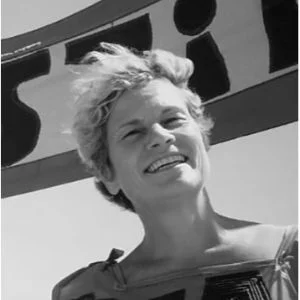
Elaine Mills is the Africa correspondent for major energy commodities pricing agency, and a former CO2 markets reporter. She is passionate about climate and social justice, and works as a Greenpeace Africa Volunteer in Cape Town. She is vocal about the danger of single-use plastics, and the role that the South African government has in ensuring we rid ourselves of them.
Remember to follow these incredible South Africans and support them in driving environmental awareness and action throughout the country. Is anyone missing from our list? Pop us an email at hello@treeshake.com to let us know, so that we can continue celebrating South Africa’s top environmental changemakers.

Why social brands are winning in the overtraded attention economy
People are swimming in content. The question is, if your brand stopped marketing, would people miss you?
We trade our attention for value. If you’re offering meaningless fodder that any brand could produce, and that doesn’t spark conversation, you won’t be seen and remembered. Whether you have paid to be in front of people or not.
by Dave Duarte and Bridget McNulty
People are swimming in content. The question is: if your brand stopped marketing, would people miss you?
We trade our attention for value. If you’re offering meaningless fodder that any brand could produce, and that doesn’t spark conversation, you won’t be seen and remembered. Whether you pay to be in front of people or not.
Attention is now more valuable than ever before. With so much competition for it, it’s also becoming more difficult to acquire. Brands today compete on emotional value with the kind of content people love on social media - music, memes, news, celebrity. Some marketers are opting out of organic social media, opting to do only paid social. But this isn’t ultimately a sustainable approach. You need to combine Paid, Owned , and Earned Media. But that is just the start.
Successful Social Brands are going beyond getting attention. They’re aiming for a transformative impact on people’s lives that makes their content unmissable.
Many of these brands are built on a strong social vision that keeps their audience coming back for more. For example, outdoor brand Patagonia is on “a mission to save our home planet”. Their digital campaigns don’t centre around product, but rather around the issues that unite their most loyal customers. Their latest campaign, for example, is around saving Wild Salmon, and is racking up millions of views while continuing to drive sales.
At heart, people are meaning makers. We have a deep sense of needing to make meaning in our lives. But the world we’re living in is so fragmented and busy that it can be difficult to find that meaning.
One of the consequences of having so much choice available to us, ironically, is that choosing becomes more difficult. Strong brands reduce the cognitive strain of choosing by helping us form preferences. Once we know and like a brand, it’s easy to spot them in a cluttered context. And as long as the brand delivers the expected emotional rewards, we’ll keep coming back.
What’s essential to understand is that people want to be loyal. Brand managers make it easier for people to be loyal by producing themed content, in an immediately recognisable way, that delivers on the brand vision.
For example, Nike has established a strong social justice voice around their sponsored athletes.
Nike sided with football player Colin Kaepernick, who knelt during the US national anthem to protest systemic racism in the NFL and was suspended for it. The payoff was simple: “Believe in something, even if it means sacrificing everything”. Two weeks after the campaign debuted, the company's online sales had risen a whopping 31% and its stock had climbed more than 6% to an all-time high.
Having established the pattern, when the IAAF announced that Caster Semenya wouldn’t be allowed to compete, people expected Nike to respond with an ad. And they delivered on time, and in a way that only Nike could. Their voice is well established, and they show up consistently while still managing to be surprising and original.
This approach would not have worked for another brand. It was a reflection of the ethos Nike has represented for decades.
Social brands deepen their loyalty and connection by letting people own the message. They use campaigns not just to push messages, but to ignite conversations. AirBnB is excellent at this. When they were blocked from sponsoring the Oscars, they decided to run a campaign based around the question: “What movie would you live in?” They seeded the question to key movie industry influencers, and fuelled the conversation with witty responses and paid promotion on Twitter. And of course, sourced places from movies around the world that you could actually book on AirBnB. The result was that they were the most talked about brand at the Oscars.
There is an idea in economics that we need to move up the value chain from selling commodities to offering experiences and driving transformations. Yoco is a South African tech company that epitomises this approach in marketing. If the commodity in marketing is attention, they are using the attention they get to drive transformation for their fans. Their campaigns are driven around the ideal of encouraging entrepreneurship.
Their latest campaign #JustStart goes beyond flogging product. At the top of the funnel is an inspiring video featuring three entrepreneurs who have used the Yoco payment platform to start and grow their businesses. But the campaign goes further than that, offering free resources and training to aspiring entrepreneurs to take that first step.
Brands that provide a big, clear purpose that people can understand and make their own are winning. Brands like Patagonia, Yoco, Nike, and AirBnB are investing their marketing money in creating not just adverts but movements. They aren’t just telling stories, they’re co-creating impact with their consumers. Yoco is igniting Africa’s entrepreneurial uprising. Nike is making everyone an athlete. AirBnB is making everyone feel welcome. They aren’t just producing random content: every post, app, conference takes us towards their bigger social vision.
Your brand can set itself apart by making a simple promise: when you invest your attention with us, your life gets better, the world gets better. We won’t waste your attention, we know how valuable it is.
Need help figuring out how to move your brand beyond the attention economy? We can help you do just that.

How #RunningDry grew from a campaign to a movement
The #RunningDry campaign got over 1.6 billion organic media impressions, including coverage from ABC, Bloomberg, CNN, The Times of India, Washington Post, Fox News and hundreds of others. Here’s how Treeshake helped Mina Guli ensure #everydropcounts
Thousands of runners from over 50 countries. Coverage from the likes of ABC, Bloomberg, CNN, The Times of India, Washington Post, Fox News and hundreds of other publications. A total of over 1.5 billion media impressions in just over 3 months. Here’s how we did it.
Mina Guli, CEO of Thirst, uses the sport of ultra-endurance running to get people engaged in water saving. She approached Treeshake to run the media, digital, and PR for #RunningDry, a campaign to raise awareness of the global water crisis.
This is What 100% Commitment Looks Like
On a chilly November morning in November 2018, Mina Guli set off to run the New York Marathon. The next morning she would wake up and run her next marathon. And the plan was to keep running until the media took notice.
Specifically, Mina was committed to run 100 consecutive marathons in 100 days, while travelling to places that show people the affects of the global water crisis. An insanely large challenge. Her idea was to communicate clearly that nothing less than 100% commitment would help us avert a global water crisis.
The basic plan was to tap into the global community of ultra endurance enthusiasts around the world who would automatically be drawn to this kind of challenge. That interest would be used as a trojan horse to bring the issue of water into people’s news-feeds. Combined with adventure travel, world class photography, and real-time storytelling it is a brilliant way to get people engaged in an issue they may not otherwise be interested in.
Two major brand sponsors, Colgate and Reebok, came on-board to cover travel and production costs.
But even with all this lined up, it was only when things when horribly wrong that the campaign took off. And that’s where the power of community really kicked in…
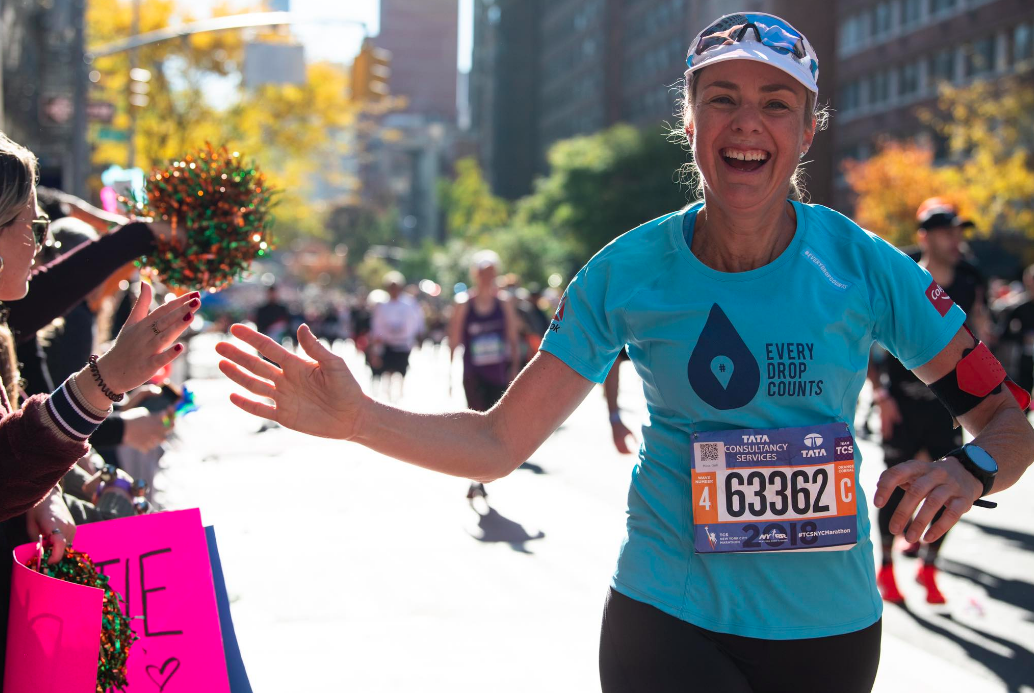
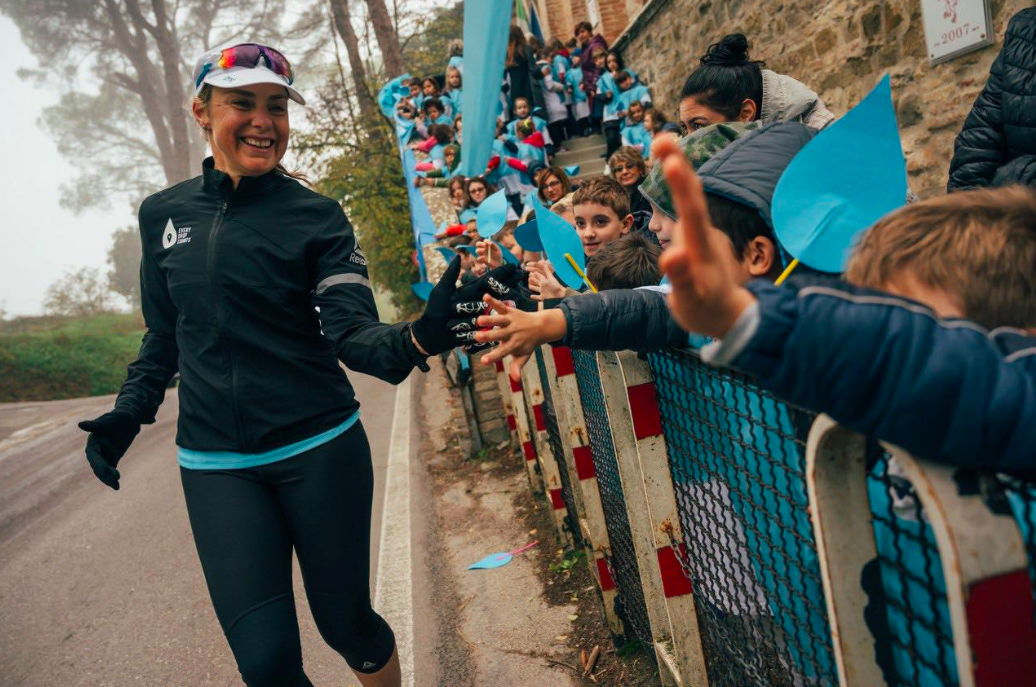
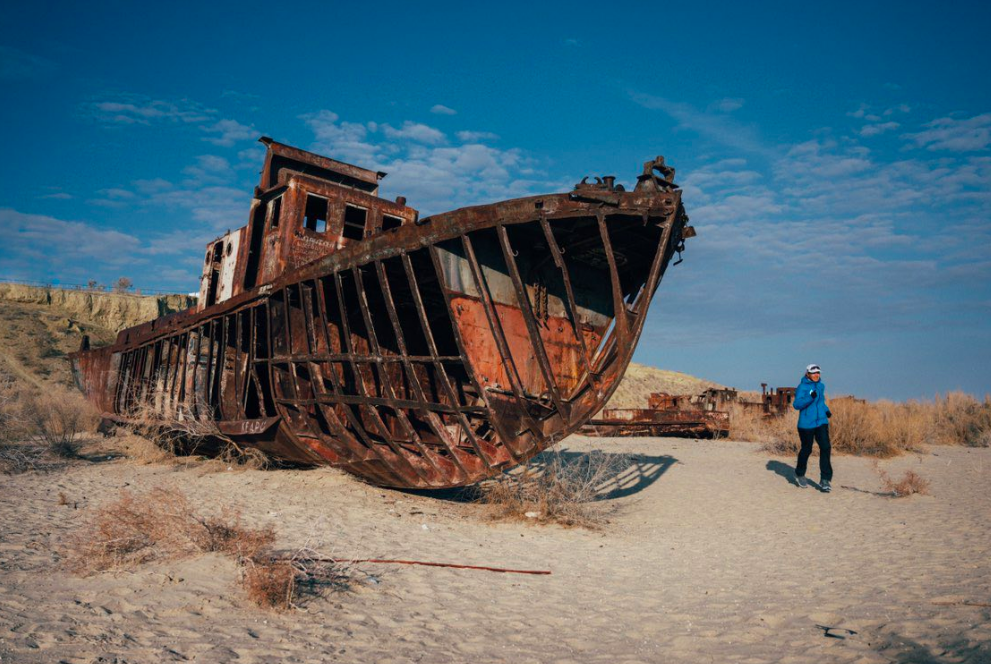
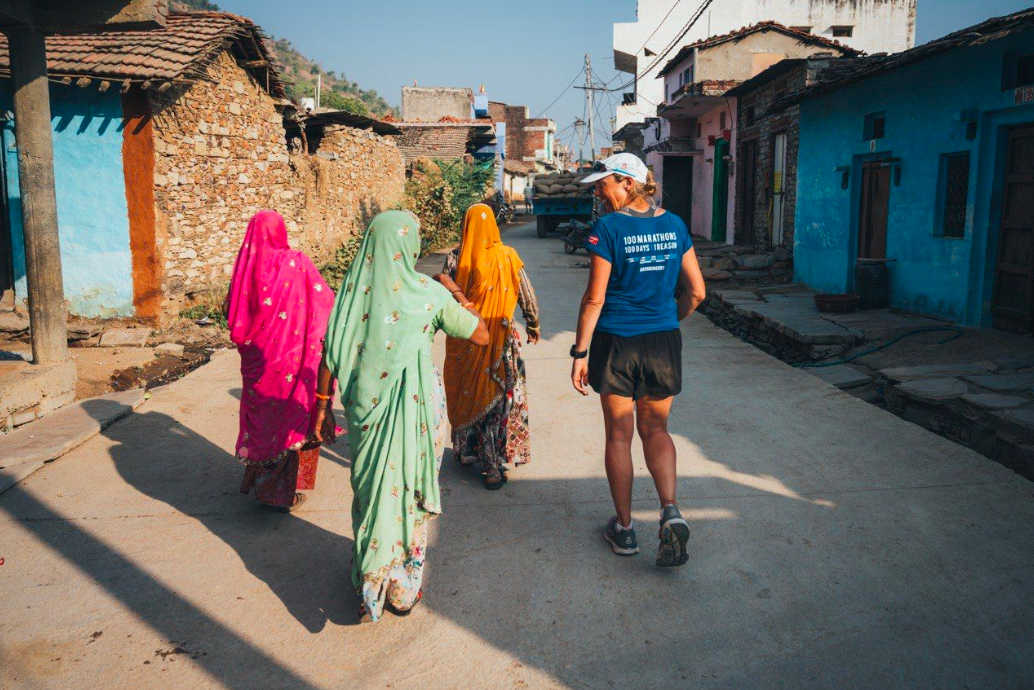
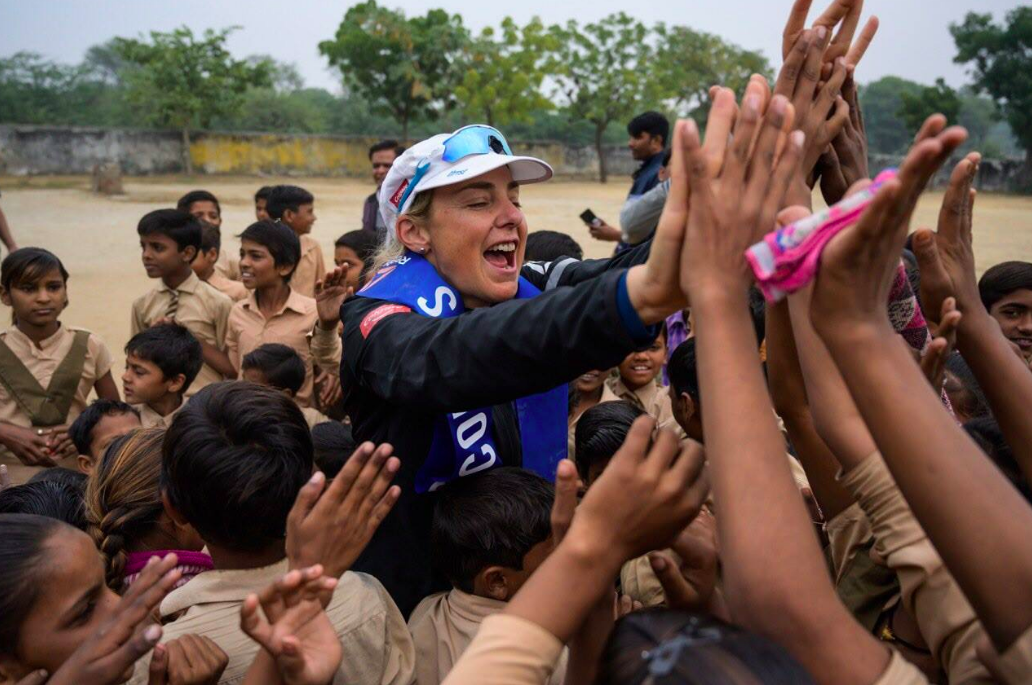
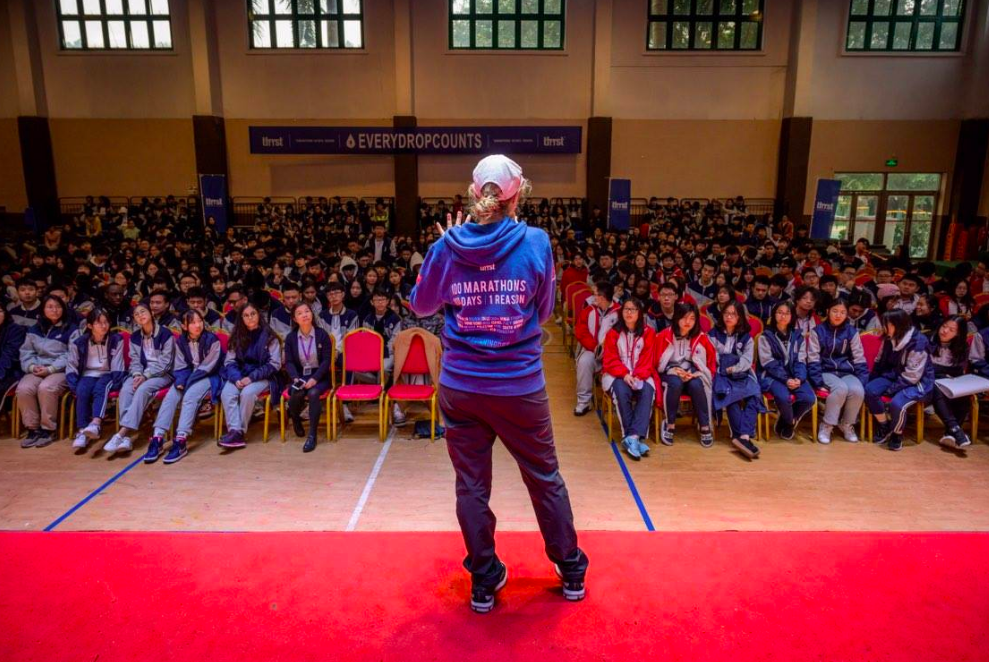
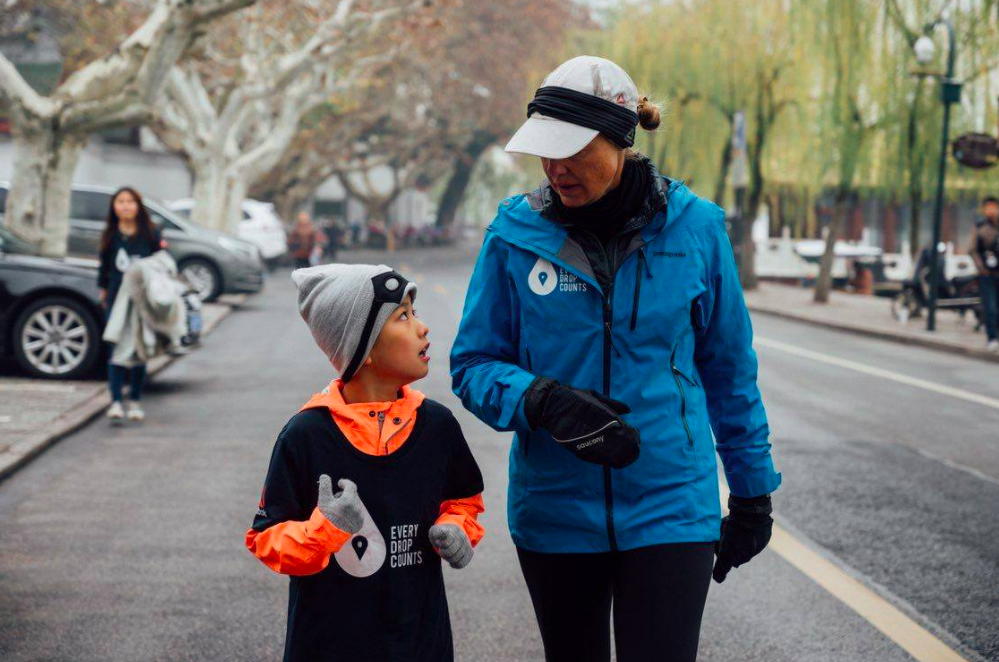
Photos: Kelvin Trautman
A team of storymakers
To sustain interest and build momentum over 100 days, it was really important to develop a content plan with built-in surprises, highlights and spectacular images. From Treeshake, we had Dave Duarte as Campaign Director; Bridget McNulty as Creative Director; Jaidan Rumboll as Community Manager; and Kelly Burke as Global PR lead.
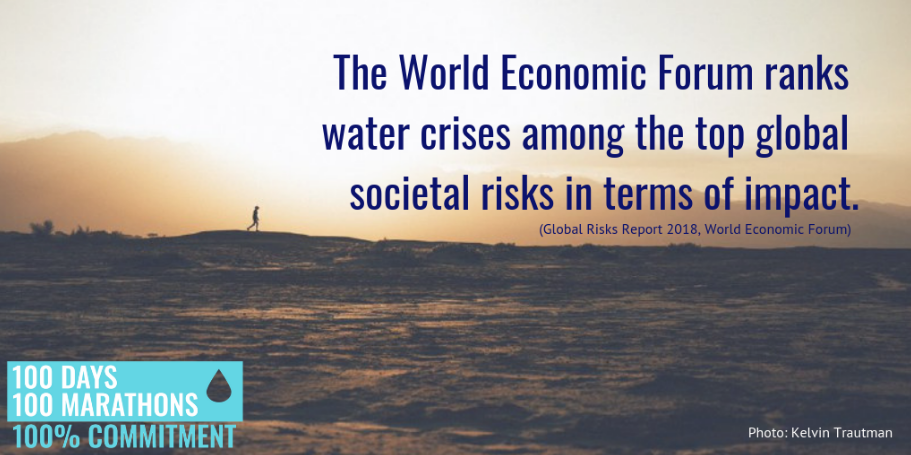
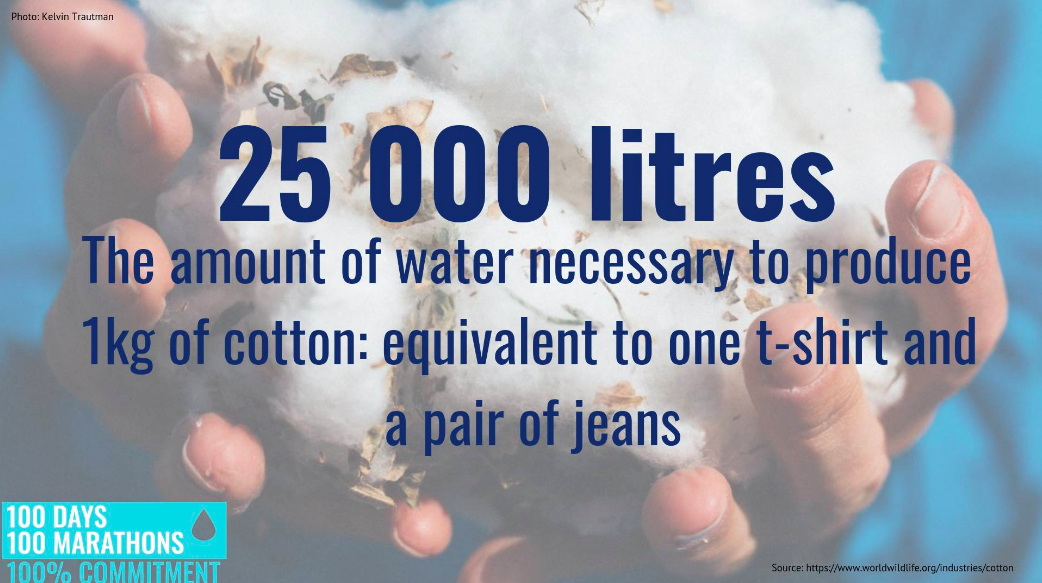
Mina would be travelling with photographer Kelvin Trautman and videographer Jared Paisley. So, the first task was to find places for Mina to run that told the story, and would look good on camera. We also identified “water heroes” for her to meet along the way, and created infographics with key facts and tips about invisible water - the huge amount of water that goes into producing our food and clothing without us even being aware of it.

The Water Heroes turned out to be a key driver of the success of the campaign. We identified the most influential people in water in each of the locations Mina was due to run, and decided to celebrate one water hero every day with a blog post and tweet. This was a lot of work, but was one of the hidden drivers of the success of the campaign. The water heroes gave us insider info, and many also became active supporters on social media.
Production is one thing, gaining attention is another. A campaign on this scale needs teams with local media contacts. Four international PR consultancies were hired to support the campaign - Fenton in the US; Fleishman Hillard in China; Frank PR in Australia; and Bubble Communications in India. These agencies gave us access to local media and helped us navigate the cultural nuances of international PR and media, which tends to differ regionally.
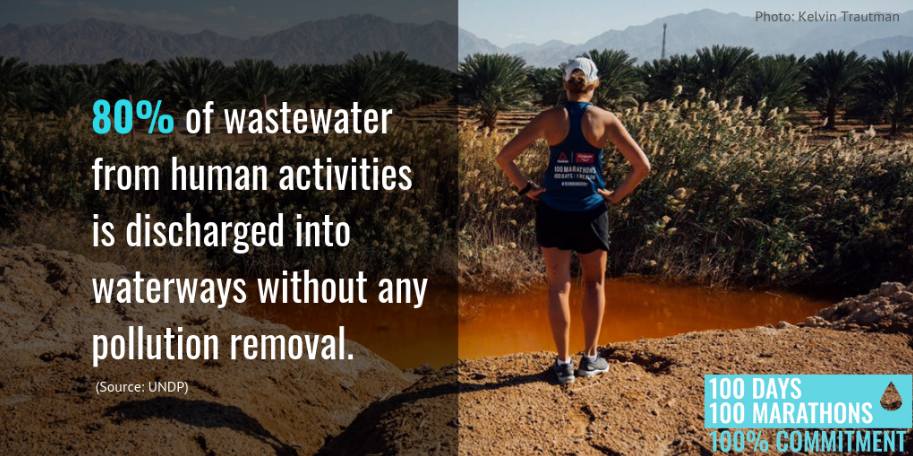
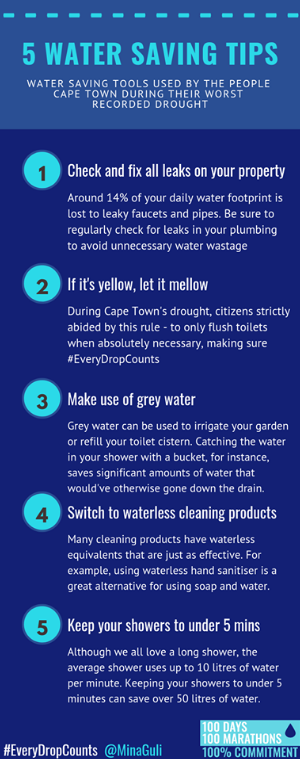
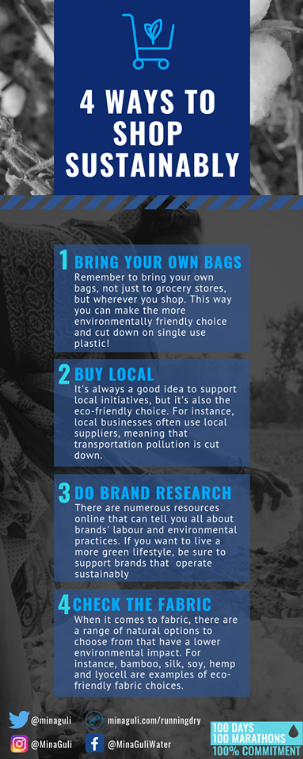
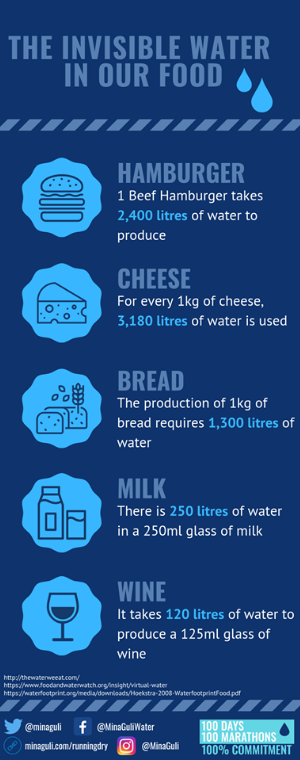
100 day logistics
The ground team travelled far, and fast, with Mina running a marathon every single day. Starting at the New York City Marathon on 4th November 2018, the team went across Europe (UK, France, Italy), Uzbekistan, India, China, Hong Kong, Dubai, the Middle East (Jordan, Palestine, Israel), South Africa, and Australia before crossing over to the USA and finishing the 100-day journey back where they started in New York on the 11th of February 2019. What this meant, logistically, is that often Mina would fly to a new country overnight, do media on arrival, drive a few hours to meet a water hero, and then run. A whole marathon. The schedule alone was a feat of endurance.
This would not have been possible without our brilliant and accomplished Chief of Staff, Melanie Ho who handled ALL the logistics - a daunting task considering the amount of travel, equipment, permits and more that needed to be arranged.
This kind of travel is not cheap, but was made possible by headline sponsors Reebok and Colgate. It was important to position the campaign and the sponsorship arrangement in a way that both benefited the sponsors and added to the campaign narrative. This was, and is, key to Mina’s campaigning model. To quote a New York Times piece about the campaign.
“Guli, 48, is part of a class of runners now picking up sponsorships the same way top-level runners coming out of college do. They won’t be winning the Boston Marathon or Olympic medals, but they offer something that shoe brands want to be a part of at a time when the top of the podium isn’t the only spotlight… Reebok and other companies are going after unique narratives they hope will inspire people.
Video: Jared Paisley
Consistently high social engagement
It was a gruelling pace, but right from the start the stories we were able to tell - on Facebook, Instagram, Twitter and Mina’s blog were beautiful, and heartbreaking. The global water crisis was being shown in true human form, and we were getting respectable numbers of video views organically. With attention to detail in ensuring that each community member felt appreciated and heard, social media engagement rates rose and were consistently higher than the norm. For example:
Facebook: 2.3% (Average Facebook engagement rate: 0.5%-1%)
Instagram: 7.9% (Average Instagram engagement rate: 2%)
Twitter: 1.7%. (Average Twitter engagement rate: 0.9%-1%)
With engagement growing, our focus on narrative, influencer partnerships, and community engagement was really paying off. By this stage Mina’s accounts had grown from around 10 000 followers to around 50 000 followers in the space of two months, we’d had respectable media coverage online, on radio, TV, and print. By all accounts it was going excellently.
An unexpected twist
Around marathon 50 Mina began walking her marathons, and they were taking more than 12 hours a day to complete. We decided to cancel her Ethiopian runs, as the relentless travel was also taking a toll. She came to South Africa and took an MRI, which verified what the whole team had feared: Mina had multiple stress fractures in her femur. Mina revealed this to the #RunningDry community in an honest video and series of photographs that many supporters said was a refreshing break from the airbrushed perfection of social media. She spoke to them person to person, sharing her vulnerability and despair at being injured.
While this was unfolding, Beaufort West, a town in the Western Cape of South Africa, literally ran dry. As terrible as this was, it was an opportunity to show the world what we were saying. Limping along, Mina joined local disaster relief organisation Gift of the Givers on the ground to donate water to the residents. It was a heartbreaking and powerful few days, and we told the story far and wide on local and international media. And then, Mina couldn’t go on.
Mina ran 62 marathons in 62 days, but on day 63 she was told by doctors that if she ran any more she would never run again. In fact, the fractures had grown since the time of her first MRI - she ran so hard she broke her leg.
As devastated as she was, we knew this was story gold. And so we kept asking the question “How does this make things better?” - an important question to consider in almost any crisis.


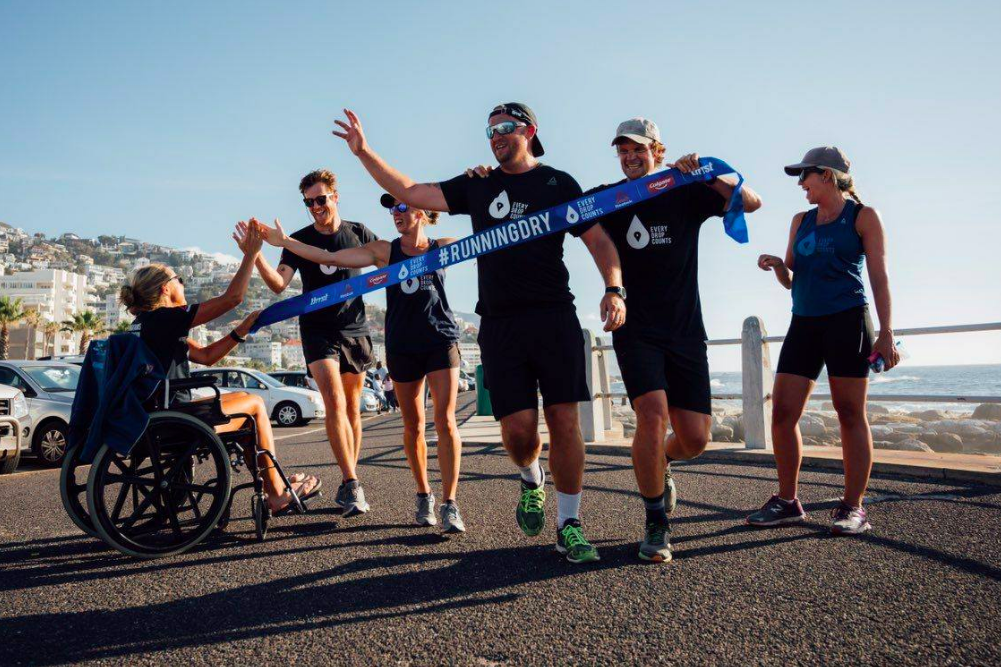
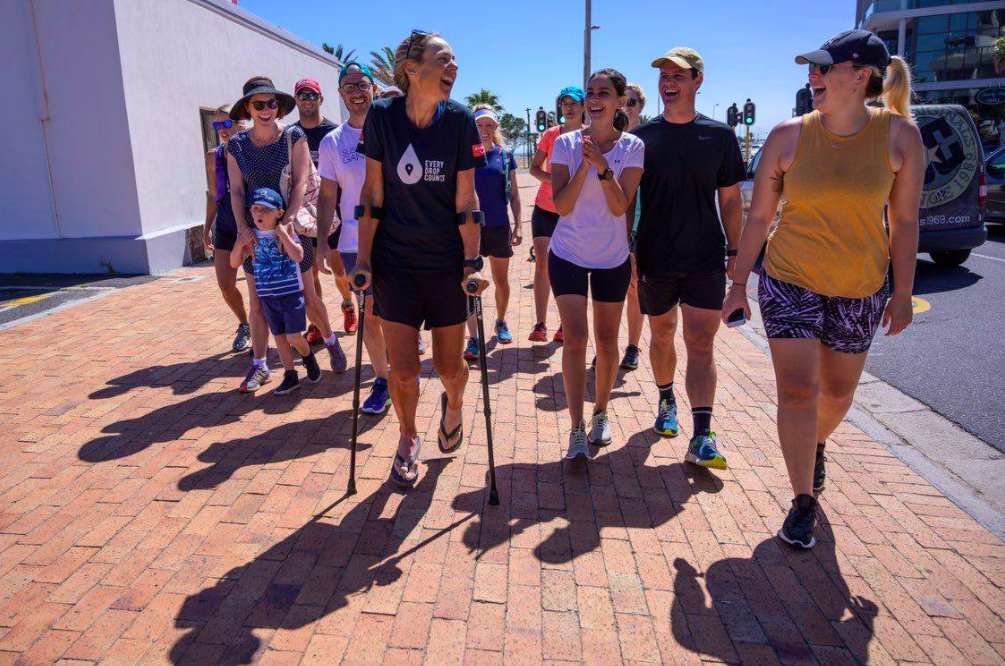
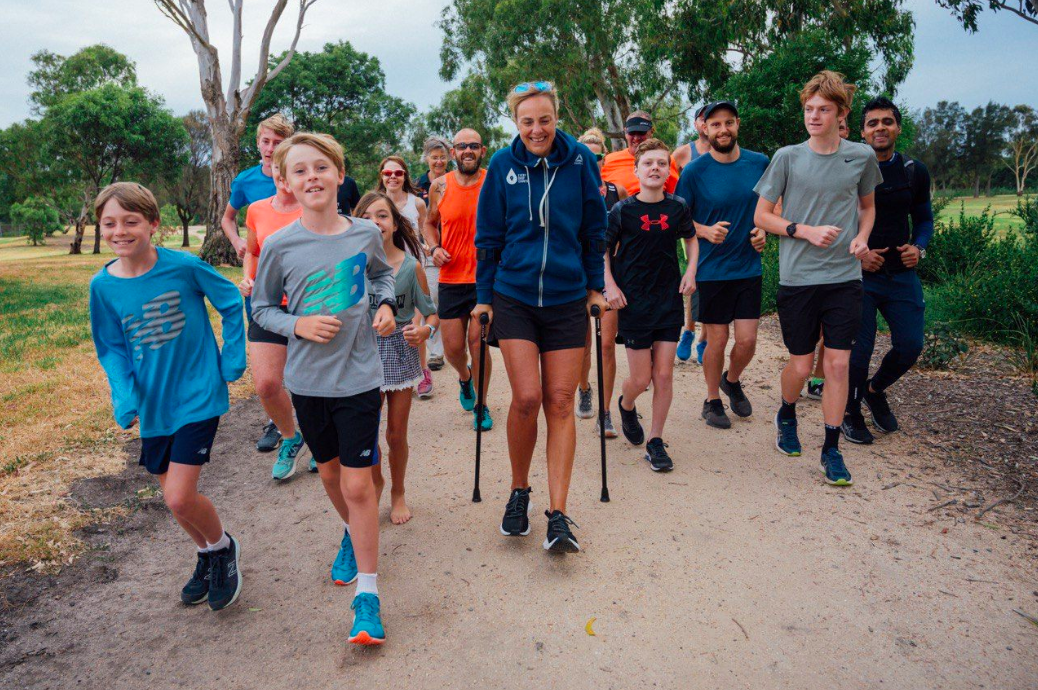
Photos: Kelvin Trautman
Campaign to movement
A few of Mina’s supporters had commented on her injury video, saying they wished they could run a marathon for her. We took this community led idea as our strategic cue, and realised this was how we would turn crisis into opportunity.
This was the point in the hero’s journey where the mentor would be needed to guide the hero through the transition. Lewis Pugh has played this role for both Treeshake and Mina and we asked him for his advice and support to help us all through this transition in the campaign and the story. He met Mina at the hospital and advised her that it was time to let others pick up the baton.
Starting off with a team run, we introduced the idea of Mina’s supporters completing her daily marathon for her. There was a lot of discussion about the dynamics of how we’d track success, and it was decided ultimately that we wouldn’t ask people to run full marathons but rather tally up ALL contributions - whether 1km or 100kms in a day.

The first follower was Bruno Sanchez from Madrid, who ran a full marathon for Mina as soon as the request was put out. That same day, we mobilized supporters in Cape Town, where Mina was that day, to contribute kilometres to the cause. The images and story were picked up by the Associated Press worldwide, and from there the #RunningDry movement began
A real community
Our team worked hard to make sure every single person who contributed distance to #RunningDry felt validated, and noticed. We replied to every comment, reached out on DM to thank people, and shone a spotlight on the community who was not only doing Mina’s distance for her, but also sharing water facts and helpful tips along the way.
To incentivise and acknowledge the community we also provided a daily tally of miles, posted on Twitter, which listed every person who contributed and ranked their distance. This proved to be a key motivator for people who contributed, as they knew that every extra mile they put in was being counted and made a difference in showing the scale of our movement.
Even though we’d only set out to log one marathon a day, hundreds of people were contributing runs that far exceeded this target. It was then that the next dream was born: Mina had set out to run 100 marathons in 100 days for water, what if the #RunningDry community ran 100 marathons in 1 day to show the power of collective action?

100 marathons in 1 day
We started working on the idea - reaching out by Direct Message to anyone who had contributed miles and asking for their support in the challenge, creating a special page on Mina’s website explaining exactly what to do, adding a pop-up so that anyone who visited the site would know about the marathon attempt. We set up a folder of easily shareable infographics on Facebook and punting the water saving messages we wanted to promote, and to let people know that we could only achieve this if we all worked together. On Sunday 27th January 2019, we attempted 100 marathons in 1 day, and we were blown away.
Mina’s vision for the 100 marathons in 100 days #RunningDry campaign was simple: to make saving water famous. Just over 2 weeks after announcing her injury on social media, the vision became a reality with #RunningDry becoming a worldwide movement.

As of midnight on the 27th of January, 251 marathons had been logged: an incredible distance of 10,629.3km. People donated kilometres from 44 different countries and territories - from Antarctica to Sweden, Mexico to Japan, Australia to Serbia and everywhere in between. Supporters logged distances from 1km to over 50km, in temperatures from -15°C to over 40°C, in deserts, snow and in forests. People ran by rivers and others by oceans and waterways. Some ran in cities and on tracks. Some ran in groups and others on their own. But every single one of them donated their miles on Sunday to support #RunningDry and help drive global water awareness.
Results
The reach of this campaign has been phenomenal. Press releases were picked up by the Associated Press multiple times and pushed to print, TV and radio around the world. The total online audience, according to Critical Mention, is 1,590,084,059 and growing daily. The estimated media value is currently sitting at over $100 million.
The rapid growth of the community online has been equally gratifying. Mina’s social media pages gained 232,506 new followers and fans throughout the campaign - with 24,830 new followers in just one week building up to the #RunningDry “100 marathons in one day” activation we did in late January.
There was an outpouring of positive comments and water facts shared, with users around the world taking to social media to share why they were running for water.
Finally, in April 2019 the United Nations selected the campaign as a top 3 finalist in their annual SDG Action Awards.
This documentary produced by ABC about Mina and the campaign tells the whole story and is well worth watching:
#PowerFutures: Fuelling discussion about South Africa’s energy transition
PowerFutures is a think tank dedicated to a just energy transition in South Africa. We produced a video to help launch the project that was seen by over 25 000 people in a day, and that has helped open doors to further media engagement and ongoing influence.

Energy is central to economic development, growth, and the achievement of the SDGs. And yet in South Africa, our energy sector operates on an old model that is holding the country back. Ahead of the 2019 State of the Nation Address, a new conversation was needed to fuel discussion and mobilise support for bold reform.
Working with a brand new account, called Power Futures SA, we were tasked with raising the level of discussion about the urgent need for reform ahead of Davos, the ANC NEC meeting, and ultimately the 2019 State of the Nation Address.
We love a challenge, and what made this campaign remarkable was that we were given one week from briefing to build the brand, define the messaging, gather the community, and get our content in-front of the key decision-makers at these events.
Kickstarting the Conversation with Video
Articles about Eskom are written every day in the media, so to get noticed and join the public conversation on this important topic we launched with a video entitled “South Africa’s Democratic Energy Transition”. This video was scripted for a very specific audience of senior policy-makers in government and at Eskom, who we ensured saw it via chat groups and direct messages on WhatsApp.
To launch the video we worked with UCT Graduate School of Business to pull together a panel of leading commentators on South Africa’s energy future. We also created a social media toolkit with talking points* which we sent directly to event participants and influential social media users.
The result was 25 000 views of the video on launch day with more than 10 separate pieces of media coverage, including the most read article of the week on Fin24 “Eskom: Breaking up is hard to do, but it may be necessary - experts”.
The stage was set, and the PowerFutures team were well positioned for ongoing engagement on the unbundling of Eskom and ensuring a “just transition” for South Africa’s energy sector.

Changing the Narrative
In a field as complex as energy there are multiple stakeholder groups, with competing perspectives on the issue of unbundling of the national energy utility. A common metaphor was needed to frame the issue and inform how it was discussed.
Our expert client likened it to having “all our eggs in one basket” - in other words, we need to diversify the risk of having a centralised power utility without any backup plan. This was the key line that we used to pitch and place a powerful op-ed, developed with Jasandra Nyker - a highly respected and influential voice in renewables. The piece, entitled ”All the eggs are in Eskom’s basket: It is time to diversify the energy sector “, was agenda setting both in terms of the content quality, the timing, and who penned it.
Within days key politicians and leaders were using the metaphor: “all our eggs are in Eskom’s basket, if it drops our economy breaks.” This powerfully framed the situation, made it easy to understand, and paved the way for the decision to unbundle the power utility.
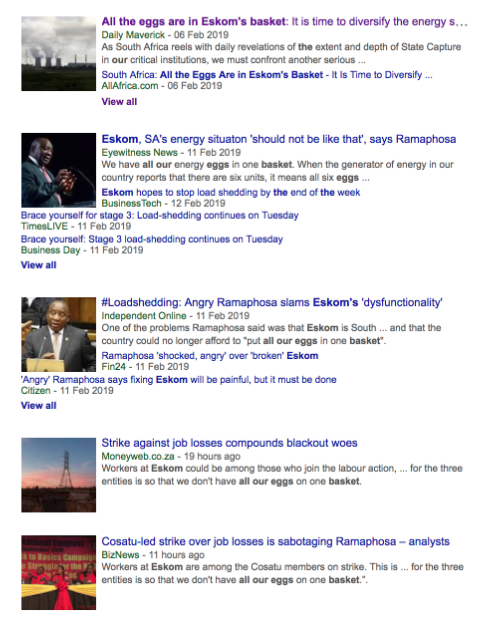
All our eggs in Eskom’s basket
This helped inform more targeted discussion about the “unbundling” of Eskom, in other words - to remove all our eggs from one basket. And within a month of the campaign Eskom announced plans to break up into three entities, paving the way for more sustainable power generation and hopefully an end to load-shedding.
UPDATE
While the announcement happened quickly, Eskom’s cogs turn a lot more slowly. A Daily Maverick exclusive in October 2022 announced that the ailing power utility is “moving full steam ahead” with unbundling into Transmission, Generation and Distribution divisions.
*Talking Points
The South African government aims to reduce coal’s share of total capacity from almost 80% in 2017 to 46% by 2030. The government also announced new plans to quadruple renewable energy’s share of capacity to 36% in 2030.
South Africa has one of the highest per capita emissions ratings in the developing world, accounting for more than 40% of Africa’s total coal-derived CO2 emissions.
Among the G20‚ South Africa’s thermal coal use is the highest and its use of renewable energy is the second-lowest.
In 2008, Eskom held an A1 investment grade credit rating. Last year, ratings agency Standard & Poor’s maintained Eskom’s rating at CCC+. Several levels deep into junk territory (and with a negative outlook).
Power Futures is an initiative of UCT Graduate School of Business

PARTS: The 5 working parts of company culture
Every good leader knows the importance of Company Culture, and yet it is difficult to grasp and actively shape. Culture determines a groups capability to respond to change, and to function as more than the sum of its parts. To help get a handle on this seemingly intangible concept let us introduce you to the PARTS of culture.
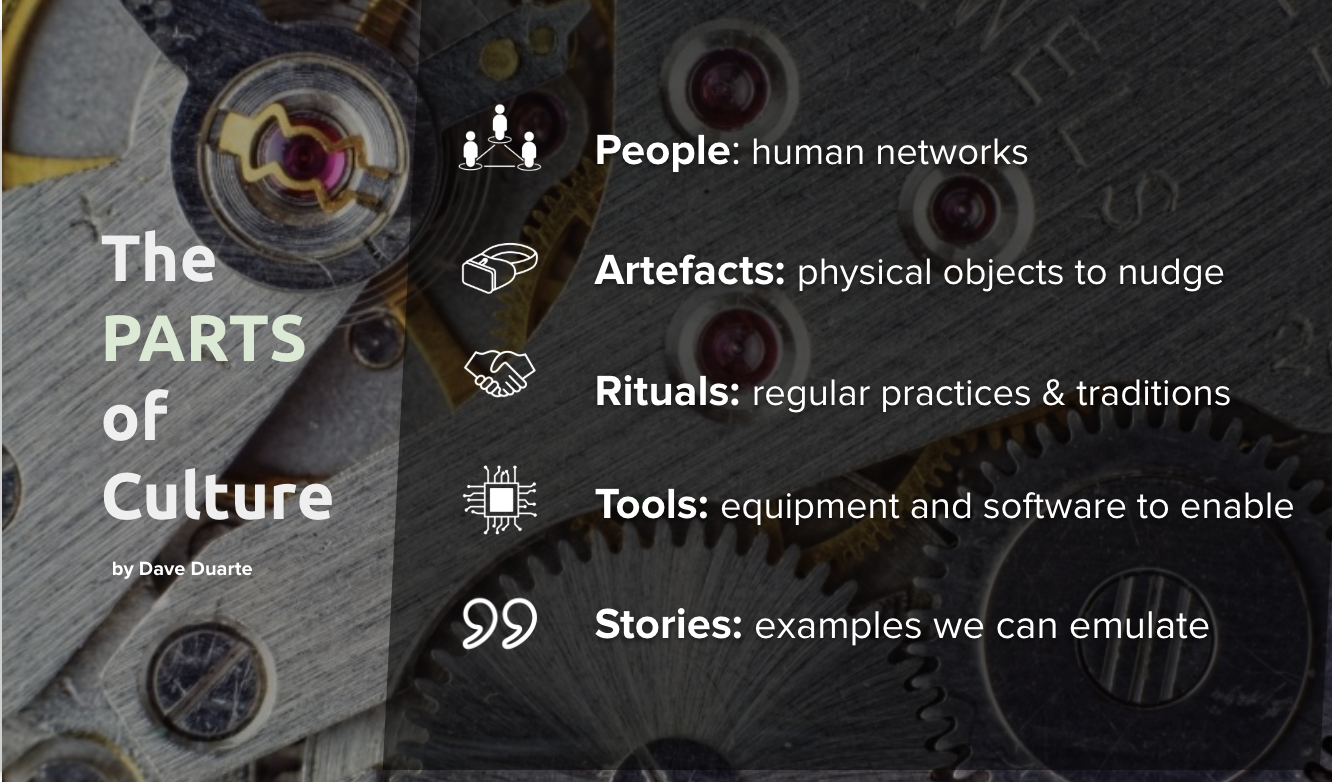
By Dave Duarte
Culture is the hidden force that shapes our decision-making day to day, what we value, and how we get things done. And yet culture isn’t something that can be set in place, it is emergent and adapts.
The PARTS of Culture provides an memorable framework to work with when aiming to influence culture. It stands for People, Artefacts, Rituals, Tools, and Stories.
A bit of background
When we launched the OgilvyDMA in 2010, Rob Hill and Gavin Levinsohn said our primary objective was to help "geekify" the Ogilvy Cape Town culture. Now, "Changing Culture" sounds all well and good, but when it came to it I had no idea where to start. I turned to sociological theory on culture for clarity, and out of that developed PARTS as a way to make the key concepts memorable and strategically actionable.
Here’s more details on each of these aspects, and how we applied them with remarkable success at Ogilvy.
People: gain the support of a few well connected people, and help them recruit others
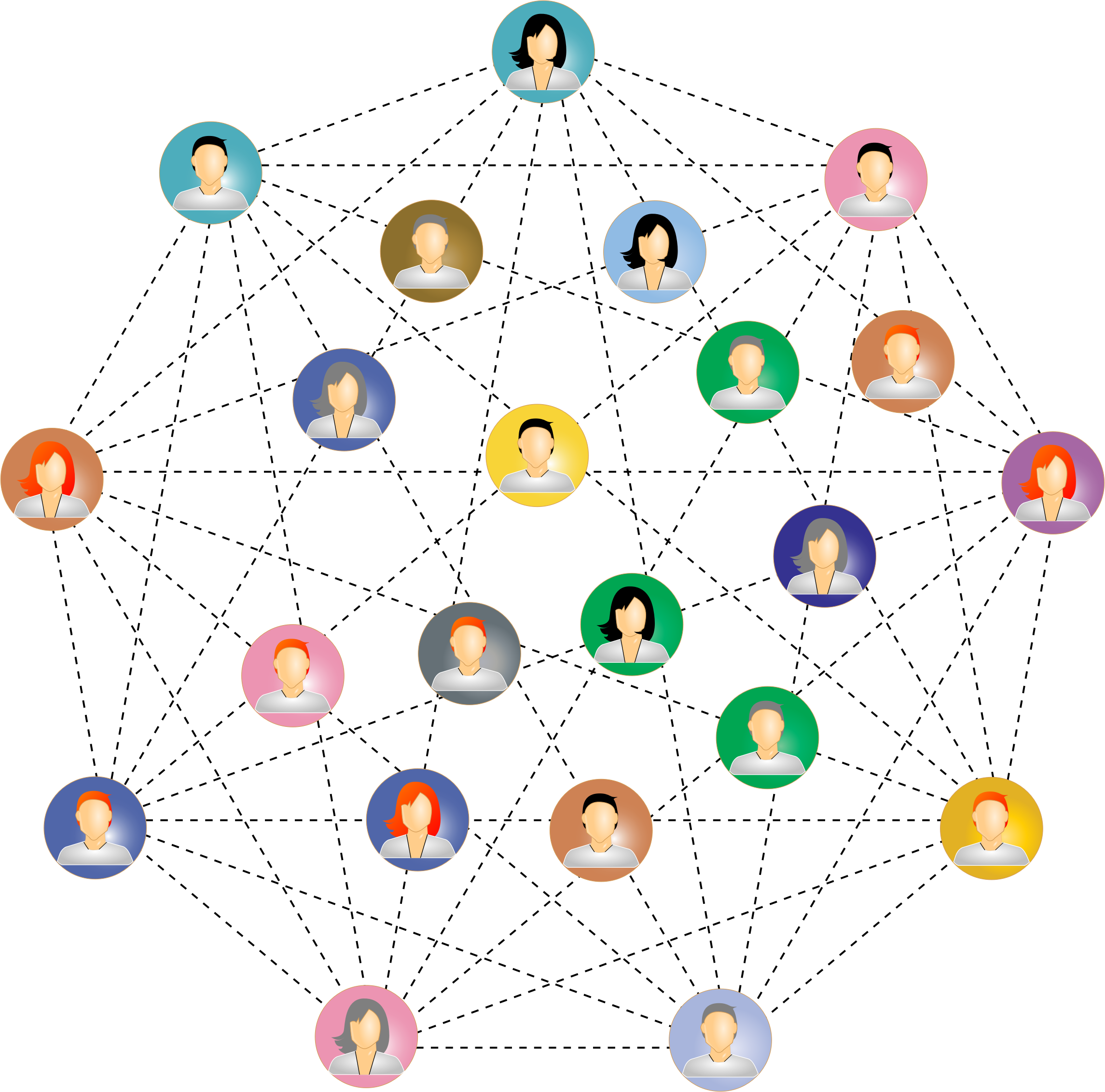
Too many companies make the mistake of trying to change the whole company at once. You’re more likely to gain traction incubating culture among a group of influential people who have provide reach and access to the rest of the organisation.
Behaviours spread from person to person (Christakis, 2007). So it's important to work with a small group of people initially to make sure the cultural change is understood and adapted.
The key players in a social network are your Experts, Influencers, Gatekeepers, and Connectors. Each are important in their own ways, and you need to gain their support for any culture change initiative. These people need to have a high frequency of contact with the cultural change process an practice. They are going to be the ones that set the example and distribute the culture to the rest of the organisation. As Derek Sivers famously put it "new followers don't follow the leader, they follow the other followers."
At Ogilvy, the most influential people throughout the agency were invited to our first Ogilvy Digital Marketing Academy, and no expense was spared in ensuring a transformative learning experience that created group buy-in and connection.
Artefacts: make the culture change public and visible
Our physical environment and the objects in it form the stage on which your staff perform. Are you setting them up for great performances, giving them the cues and props they need? Art, Awards, and artefacts of belonging (like lapel pins, t-shirts, certificates) all serve to communicate cultural values.

Open Knowledge Foundation, "OPEN" lapel pin, by Brian Glanz
Amazon, for example, reminds people of their value of frugality through the use of door-desks throughout the company.
Ogilvy encouraged more a more digitally savvy culture by making the latest gadgets available to staff through Ogilvy Labs. There are screens live-streaming social data from clients, there are interactive demos of the latest in sensory technology around the office, and there are framed certificates displayed for people who complete digital training. Other artefacts could include the kinds of awards that are valued, for example, displaying Cannes Lions, or Bookmark Awards.
Rituals: Go from a moment to a movement
The things a company does regularly become a signal of their culture. The rituals can be small or large, everything from how you on-board staff to how you handle daily meetings.
The key thing when you want to introduce a ritual is to do it consistently and repeatedly. It takes time for new behaviours to take root. Your company values aren’t just things that you just write down and forget about, they should be reflected in what behaviours you reward. In who you hire, promote and let go. These create behavioural norms that become embedded in your company culture.
For example, Ogilvy hosts a regular “How-To Friday” session where people who have done something extraordinary share how they did it. This signals the company’s long-term commitment to hands-on innovation.
Tools: give people the resources to create change
How do you equip your people to do their work in a way that reflects company culture? You can't expect change if you don't enable it. Language, skills, technology, equipment, and other resources are major enablers of change.
The most fundamental tool for culture-shaping is language. When you want to shift culture, equip people with new ways to talk about what they do.
A key part of the Ogilvy Digital Marketing Academy's success was, and is, giving people the language to speak about digital. Concepts like Impressions, Reach, Landing Pages, and Programmatic become more useful when we have the words to talk about them.
Story: don't just tell people about the change, show them what others are doing
Stories are the way that people naturally encode and share complex social information. There are two ways a company can bring their story to life: storytelling and storymaking.
Storytelling is about finding examples of good cultural practice and crafting stories around those actions so that it is easier for others to understand what to do, and to emulate the success of the cultural heroes you celebrate.
Storymaking is about kickstarting this process. It’s not just about what you celebrate, but also how you take action. It is about taking decisive action to establish cultural precedence.
At Ogilvy, stories were created by investing more heavily in case-studies involving digital integration, such as Be The Coach (which went on to become the most awarded campaign of the year - winning international plaudits including four Gold Lions at Cannes)
Stories are like software for the mind. They help us understand cause and effect, and can have a transformative effect on what we see as possible and expected.

The results of the first application of our PARTS model can best be summed up by Ogilvy Cape Town's Managing Director, Gavin Levinson
“What’s the best thing that’s happened in the Ogilvy ‘family’ over the past three years? While there are many highlights and accolades within and across all of Ogilvy’s companies, I would undoubtably say that the ODMA has and continues to be our finest hour.”
Treeshake offers story-making workshops and talks on culture change, leading innovation, and values-driven leadership.
#BI4Gov: How a small, but deeply engaged community can have HUGE impact
How a new Twitter account with no followers and no paid media budget got a niche topic trending and reached over 2 million people in less than two weeks.

This case study is about how a new Twitter account with no followers and no paid media budget got a niche topic trending and reached over 2 million people in less than two weeks.
In late 2018, Treeshake helped launch #BI4Gov, a conference focused on how to use behavioural insights to successfully shape and implement policy, in a socially beneficial way. Through a partnership between the Western Cape Government (WCG) and the Organisation for Economic Co-operation and Development (OECD), experts from throughout the world came together to discuss the ins and outs of using BI in Government.
Starting with a brand new account with no followers on Twitter, and just two weeks to launch we knew that we’d be reliant on the voices of others with larger followings.
The first step was to set up the account to look as credible as it was - partner logos, clean design, and 3 high quality posts were set up. We then sent the page around to the team of collaborators and asked them to engage with the posts and follow so we’d have a bit of traction.
The next step was to tap into BI communities on Twitter, and identify thought leaders. We directly engaged around 60 followers ahead of the conference and directly asked them to follow us and help us get the #BI4Gov discussion going. We did this by email and direct message rather than publicly.
We found the BI enthusiasts supportive, warm, and welcoming to a new entrant to the space - this is partly thanks to declaring our agenda upfront, having the backing of the OECD, and introducing ourselves directly to the main thought leaders. This got the conversation rolling, and even with a relatively small following, everything we posted got a response.
The official Twitter account quickly gained around 150 followers. Without any paid advertising budget, we relied solely on consistent, authentic engagement with each member of the community. These followers were all highly skilled BI experts, each of whom had very strong links to the overall online BI community. This allowed for a higher degree of sophistication in the commentary and posts we put out, along with a much higher than average engagement rate.
On the day of the conference, the hashtag was visibly promoted at the conference, attended by around 300 people - many of whom had been contacted by the social media team ahead of time to let them know the importance of sharing their views. The result was that virtually everyone who attended participated in the online discussion, sharing substantive content that attracted public interest and media attention.
But it wasn’t all serious, either. As participants got to know each other, playful Twitter banter emerged in the form of ‘the sock saga’, with various speakers and organisers of the event comparing their funky sock choices. With the perfect mix of serious, insightful and fun, the #BI4Gov community blew us away with their deep engagement and commitment to the conversation.
Most importantly, the conference and public support for the issue has led to the establishment of South Africa’s first Behavioural Insights Unit in Government - #BI4Gov is here to stay.

The main take away from this? A small group of deeply engaged people can make a huge impact. Inspired by Cultural Anthropologist Margaret Mead, this is something we call The Mead Principle:


Behavioural Insights in government: Nudging for change
Policy and Behavioural Science may not seem like a natural fit, but they are. Our behaviours and choices have a huge effect on the way a city works - for example, how much water we use; what public transport we take; how much electricity we use; whether we litter; and so on. Government can’t force people to behave in a particular way, it always comes down to personal choice.

This week in Cape Town, experts from around the world converge to discuss the use of Behavioural Insights in Government. A partnership between the Western Cape Government (WCG) and the Organisation for Economic Co-operation and Development (OECD), discussions focus on how to apply BI to shaping and implementing policy.
Policy and Behavioural Science may not seem like a natural fit, but they are. Our behaviours and choices have a huge effect on the way a city works - for example, how much water we use; what public transport we take; how much electricity we use; whether we litter; and so on. Government can’t force people to behave in a particular way, it always comes down to personal choice.
But government can shape policy in a way that makes it easier to make choices that benefit the most people.
Behavioural Insights (BI) is gaining acceptance as one of the most effective ways for government to bring about social benefit through policy. The Policy and Strategy Unit in the Department of the Western Cape Premier has been studying and engaging with BI since 2012, and the UK government has famously had a ‘Nudge Unit’ (the Behavioural Insights Team) since 2010. But if we look at the South African context, where we’re faced with high rates of HIV infection, crime, obesity and other socio-economic issues, understanding human behaviour and how to change it from within becomes even more critical.
Since 2012, the WCG has worked with the Research Unit in Behavioural Economics and Neuroeconomics (RUBEN) at UCT, to create some of these solutions. RUBEN is an interdisciplinary group of researchers using economic research methods to look at how social, cognitive and emotional factors influence our economic decision-making.
One of the first projects piloted was on energy efficiency - encouraging the Western Cape Government to cut down on energy consumption. We wanted to understand why employees were leaving lights on all weekend, and nudge them to switch lights off.
We identified 6 behavioural bottlenecks that were standing in the way of energy efficient behaviour:
Diffused responsibility: employees not understanding whose responsibility it was.
Moral justification: public service employees felt they were contributing positively to the environment already.
Unit confusion: employees not understanding the significance of simply switching off a light.
Limited attention: forgetfulness played a big part in this.
Identity: when employees were in “work mode” they forgot their energy efficient behaviour from home.
Social norms: there was no reference point for personal energy consumption in relation to colleagues.
We used these insights to design an intervention that led to a 14% reduction in energy, which was deemed statistically significant. This is one of the aspects of BI that is so beneficial to policy: by measuring the results, you gain an understanding of what works - and doesn’t work - before you roll out the policy to everyone.
Behavioural Insights offers a set of tools and methodologies that we can use make a real difference in South Africa.
If you would like to keep track, or get involved, please engage using the hashtag #BI4gov on Twitter or @bi4gov.

How - and why - Behavioural Insights can help governments
The inclusion of BI into the processes of policy-making allows for governmental policy that not only accurately represents human interests, but has practical, well-researched examples and case studies. What does that mean? Everything is verified. BI’s focus is on creating and substantiating policies that prioritise human needs - and behaviours.
“There is a movement afoot to weave psychological science into the fabric of government. And by using the words ‘weave’ and ‘fabric’, I mean to signal something unique: an attempt, now emerging from within government itself, to integrate the insights and experimental methods from the psychological sciences directly into day-to-day governance.” David Yokum: Director of The Lab @ DC, Washington DC, USA.

Understanding the ‘why’ behind people’s actions - the reasons they behave the way they do and, just as interestingly, don’t behave the way they should - is the primary fascination behind Behavioural Insights (BI). As a result, BI is seeing exponential growth in its capacity as an innovative approach to policy-making. Because it is grounded in research from multiple fields such as cognitive science, social science and psychology, BI provides a deeper understanding of how humans make choices, in a way that supports human-centric policy.
The end result? Policy-making that accurately reflects and represents human interests.
Understanding BI’s role
BI is one part of a triangle: consisting of BI, BS and BE. Or, in other words, “one discipline in a family of three, the others being behavioural sciences and behavioural economics” (Lunn, 2014; OECD, 2016). In order to understand BI, it’s helpful to unpack the related disciplines that inform it:
Behavioural Sciences (BS) encompass the study of human behaviour through a scientific lens, and often intersect with the broader social sciences, such as anthropology, psychology and sociology.
Behavioural Economics (BE) examines economic decision-making from a behavioural standpoint, emphasising the psychological, cultural and social factors which influence these decisions, rather than viewing economics from a purely theoretical perspective.
The inclusion of BI into the processes of policy-making allows for governmental policy that not only accurately represents human interests, but has practical, well-researched examples and case studies. What does that mean? Everything is verified. These examples and case studies illustrate proven, real-world outcomes. BI’s focus is on creating and substantiating policies that prioritise human needs - and behaviours. Policy-making in government and public institutions has a greater chance of consistent and successful projections if it includes BI.
Guiding principles for BI in government
Since 2013, the OECD have been a significant supporter of public institutions using behavioural insights in public policy. They understand that for BI to become an invaluable policy-making tool, we need, “guiding principles and standards… to guide future applications and maintain the trust of public bodies and citizens” (OECD, 2017). Although BI has generally been used in the late design phases of policy, the potential for integration is much larger. “So far, BI has been mostly applied while implementing policies - often fixing policies that hadn’t fully reflected how individuals actually behave and make decisions,” explains Filippo Cavassini, Economic Adviser in the Regulatory Policy Division of the Public Governance Directorate at the OECD. “But thinking early about actual behaviours can make a difference in improving the effectiveness of public policies. This includes health services, how teachers and students learn, how to keep neighbourhoods safe and how to use natural resources sustainably.”
Making life better, using BI
BI has been used to improve consumer experience in multiple instances. In 2015, for instance, the OECD worked with the Columbia Communications Regulator (CCR) to address user complaints regarding expensive, unsatisfactory products and communication services. Their team did research into the issue, and experimented with ways to improve and redesign the regulatory regime to protect consumers. The results were assessed with quantitative and qualitative methods, and the proposed policy change was opened for public consultation. The result? A new, successful, behaviourally-informed consumer protection regime, which monitored user response to determine satisfaction.
Implementing BI into the policy-making of government and other public institutions allows for policy that truly reflects, represents and supports human interest in a holistic way. Using BI in this way acknowledges the validity of theoretical strategies, without diminishing the value of empirical scientific methods.
We all agree - on some level - that our governments are there to guide and help citizens to live better lives. How much more effective would these governments be if, instead of making decisions behind closed doors, they welcome the behavioural insights of the people they are trying to serve? BI in government is not new - the OECD reports that over 200 institutions within and outside government are applying behavioural insights to design and implement public policies.
The question is: why isn’t it every department in every government?
If you’re looking for even more info on what BI can do for policy-making, head over to the BI4Gov website and register for South Africa’s first Behavioural Insights conference.


13 Essential Behavioural Insights for Changemakers
Behavioural Insights (BI) offers a set of proven methods that can be used. The field combines elements of psychology, cognitive science and social science to understand how people actually make decisions. These principles of BI are fascinating and apply to all of our lives and decisions. This article provides an overview of 13 proven principles that can be used to nudge our choices and actions.
We know we should eat healthily, exercise more, recycle, stop littering, donate blood, and reduce our water use. So why don’t we just do everything right? Well, humans are not always rational, and behaviour change can be hard.
Behavioural Insights (BI) offers a set of proven methods that can be used. The field combines elements of psychology, cognitive science and social science to understand how people actually make decisions.
For policy makers in government this is especially important, because the daily choices people make in their lives - from whether to use condoms, to what public transport to use - can have massive implications when multiplied by millions of citizens. The Cape Town water crisis of 2018 is a case in point.
This is why the OECD and the Western Cape Government are organising the Behavioural Insights Conference in Cape Town on the 27th and 28th September 2018: @BI4Gov. The Conference is bringing together BI authorities from all over the world to discuss how to apply the science of human behaviour and decision-making to public policy.
These principles of BI are fascinating and apply to all of our lives and decisions. This article provides an overview of 13 proven principles that can be used to nudge our choices and actions.

13 essential Behavioural Insights terms:

1. Anchoring:
The act of anchoring thoughts or decisions on the first piece of information we receive about a topic - whether or not it’s relevant or the best information. If you’re asked to guess the price of something and have recently answered an arbitrary question with a number (such as: how old are you?), your answer is more likely to be anchored to that number. Our decisions are anchored by mental reference points, whether or not they apply.

2. Availability Heuristic:
The availability heuristic speaks to the way we make decisions based on how easily we can access information about the topic. We judge something as more likely to happen if we can easily recall an incident or example of it happening before - even though our availability is largely influenced by what the media chooses to focus on. A common example of the availability heuristic is the question: What do more people die of, shark attacks or being hit on the head with a coconut? About 80% of people say that shark attacks cause more deaths, but that’s not true. There are far more coconuts falling from trees than fatal shark attacks, yet shark attacks are usually scary and gory, so they get all the media attention. As a result, they are more available to us and we can remember them more quickly.

3. Behavioural Bias:
Behavioural Biases are a group of behaviours (including Anchoring, Commitment, Confirmation Bias, Decision Fatigue, Framing, Loss Aversion, Optimism Bias and Priming) that cause us to act in an irrational way and make bad decisions; without being aware that we’re acting because of a bias. They are also sometimes called Cognitive Biases.

4. Confirmation Bias:
Confirmation Bias is when we seek out opinions and information that confirm our existing preconceptions and thinking. It is reassuring to believe that we have made the right decisions, so even when potentially looking for alternatives, we are often motivated to find confirmation of our current choices.

5. Commitment:
We see the effect of commitment when people publicly commit themselves to something - an idea, a person, a cause - and then feel obligated to follow through. Commitment is also seen when people are involved in creating things themselves, and feel more strongly about that thing. IKEA plays strongly on this idea: people are disproportionately attached to their IKEA furniture because they had to put it together themselves. The IKEA Effect studied how much more people were willing to pay for a simple IKEA storage box when they had put it together themselves. The result? Significantly more. Commitments have been shown to be most effective when there is a great cost to breaking them, as in a penalty to pay if you withdraw an investment early.

6. Decision Fatigue:
Making decisions is an exhausting activity, and when we are required to make numerous decisions in a day, we often suffer from Decision Fatigue - which leads to making poor decisions. Studies have shown that judges are more lenient when they’ve just had a snack break or lunch, which is an example of decision fatigue.

7. Framing:
Framing speaks to the way we make decisions based on how the information is presented - how it is framed. Choices can highlight one of two sides to any product or situation: the positive or the negative. Describing a cut of meat as 95% lean is far more appealing than describing it as 5% fat. Similarly, ‘virtually sugar-free’ sounds much healthier than 7% pure sugar.
8. Heuristic:
Heuristics are a set of cognitive shortcuts that make decision-making easier. You can think of them as rules or shortcuts that help to reduce our mental load, but they aren’t always perfect. There are a number of common heuristics (like the Availability Heuristic). An example of a heuristic is substituting an easier question for a hard one. So instead of answering the question, “Should I invest in this company?” we swap it out to, “Do I like this company?”


9. Loss Aversion:
It is twice as painful to lose something as it is to gain something (even if that ‘something’ is of the same value). So we are far more motivated to avoid losses than to seek out gains. If a friend offered you a coin toss where you had to give her R100 if it landed on heads and she would give you R100 if it landed on tails, would you take that gamble? Most of us wouldn’t - we would require the winning amount to be twice as much as the amount we might lose. Losses have a larger psychological impact on us than gains.

10. Nudging:
Perhaps the most famous term in BI, nudging, refers to a subtle intervention that suggests people act in a certain way while still allowing them free will. A nudge alters our behaviour in a predictable way without forbidding any specific actions. If you think about the way a GPS guides you to your destination, that’s nudging.

11. Optimism Bias:
We have a tendency to overestimate the likelihood of positive things happening to us, and underestimate the likelihood of negative events happening to us - this is optimism bias. We don’t think it’s likely that we’ll get in a car accident, relative to other people. Yet the other people also don’t think it’s likely that they’ll get in a car accident.

12. Priming:
Priming refers to subconscious cues that can affect our behaviour and actions. Priming activates linked memories, associations and stereotypes that are subconscious. Studies have been done that show that simply reading words associated with old age - lonely, grey, wrinkled - (interspersed with other words so it’s not a conscious association) make us walk more slowly.

13. Social Norms:
We are heavily influenced by what the people around us are doing - by what the societal norms are. This affects both our behaviour and our decisions, and can be seen as behavioural expectations or rules within a group of people. This is often used in behaviour change by highlighting individual consumption (for example, water use) in comparison to the average in your neighbourhood or city.
Now that you’re clued up, head over to the BI4Gov website and register for South Africa’s first Behavioural Insights conference. Registration is free for approved delegates - it’s sure to be 95% interesting (and that’s not framing).

All images by Recombiner




Dave Duarte, founder of Treeshake, is passionate about community engagement as a driver of value. As social marketer, speaker, facilitator and advisor, his warm and engaging style makes the future easy to engage with. Dave brings over a decade of facilitation experience to his work at Treeshake. He has founded several businesses, and served in leadership positions in media, academia, and non-profits.